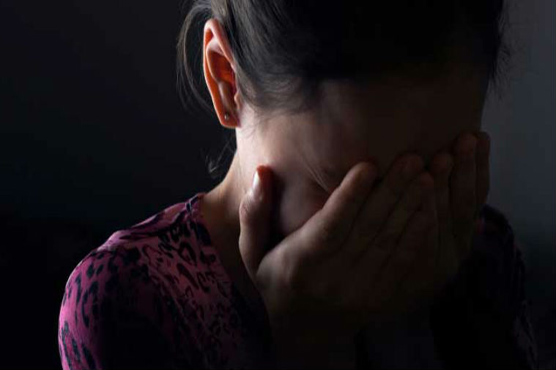
Summary Women seek help too late due to stigma and fear of family’s reaction associated with cancer.
(Web Desk) - Women from South Asian backgrounds living in UK hide their cancer because of a perceived stigma about the disease.
According to BBC, women choose to hide it and even in a few cases suffer on their own through chemotherapy for fear of their family’s reaction.
Some experts believe that women seek help too late, causing preventable deaths.
In one of the cases, a woman died as her cancer spread and she didn’t seek treatment earlier. She only went for a treatment when her breast was rotten.
In an interview to the BBC, Pravina Patel, talks about her own experience when she noticed a lump on her breast when she was 36. She mentions growing up in a strict Indian community where talking about cancer was considered a taboo subject. She decided to hide her cancer when she was diagnosed with it.
"I just thought if people hear the fact that I ve got cancer, they re going to think it s a death sentence," she said. Due to the stigma around cancer, Patel recalls that she was worried that people would say that she had lived a “bad life” and God was punishing her for it.
While seeking treatment for her cancer, she continued to keep it a secret and during the period of her chemotherapy she felt “extremely lonely”. "I was going through chemo sessions on my own... I had some very dark days," she explained.
Researcher Pooja Saini, who is the lead researcher at CLAHRC North-West Coast , a research arm of the NHS that looks into health inequalities, says that it “really surprised ”her when she was looking into this issue.
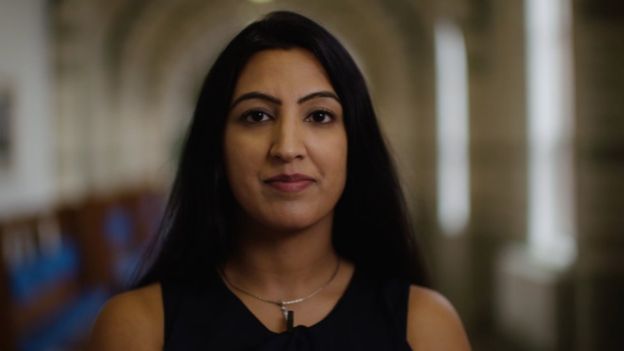
Researcher Pooja Saini says some women are afraid having cancer "might affect their children because no one would want to marry them" Photo: BBC
"Some women went to the extent of not even having treatment because, if they went, people would know as they d lose their hair," she explained.
She added others "feared it might affect their children because no-one would want to marry them".
Due to the little information collected on ethnicity and morality, it is hard to find how wide spread the issue is.
Saini said that her research suggests the influence of men in the family and elders in the wider community might be contributing into the issue.
"If they didn t think women should go for screening, then they didn t go," she said.
Patel who is now in remission, talks about how women would avoid smear tests because they did not want to be considered as “impure”.
She and her husband got divorced during her treatment – something she says was partly because of the cultural expectations about how a wife should be.
Some experts are concerned that women from South Asian backgrounds suffer more and unnecessarily due to this stigma. According to National screening statistics women from ethnic minority communities do not go for screening as much as their white counterparts.
Madhu Agarwal, a cancer support manager who has worked in the field of cancer for more than 30 years, fears this is leading to South Asian women dying unnecessarily.
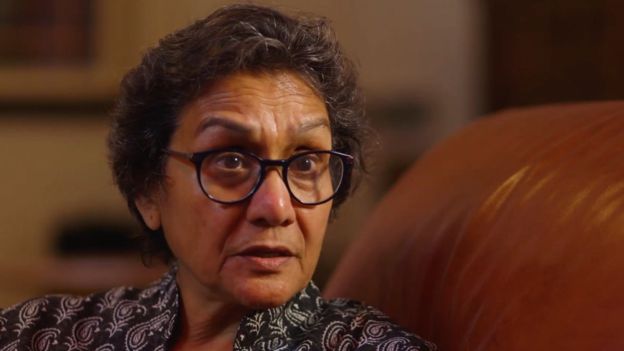
Madhu Agarwal says many South Asian women are seeking help too late. Photo: BBC
"Because of the ignorance of not presenting early, not examining the breasts... the disease has already spread [when they do seek help] and it s very difficult to manage it with treatment.
"Then the mortality is high, so there is a stigma attached - that when you get cancer you re going to die."
She said one of her patients had come for treatment so late that her breast was "fungating" and "rotten".
She recalled: "It smelled so much that you couldn t even sit next to it."
The woman - who had young children - died because the cancer had by then spread to other parts of her body, Agarwal explained.
Other women in the programme spoke on their experiences while they were receiving their chemotherapy. Samina Hussain said that one of her family member told her to start wearing a hijab to hide her cancer, saying, “You can cover this up now.”
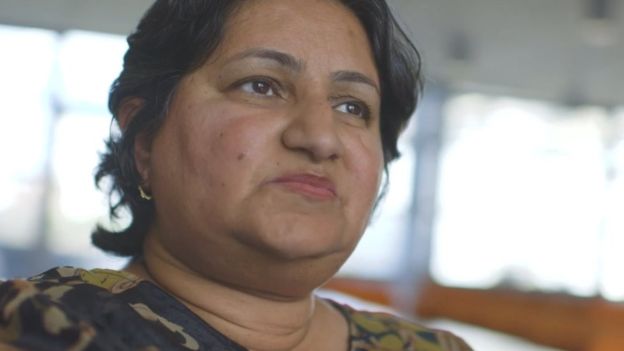
Samina Hussain says one of her family told her to wear the hijab to hide her cancer Photo: BBC
Iyna Butt said that her aunt refused to receive chemotherapy as she felt “God had given [cancer] to her”.
Saini is working on collecting more data on screening uptake by ethnicity, so that the findings can be used to provide support to the communities.