Summary An American government official predicted worst relationship between the United States and China
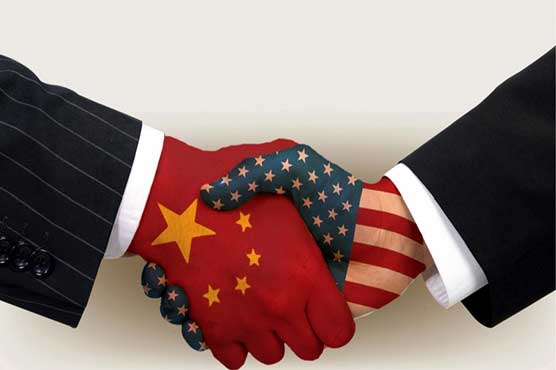
(Web Desk) — Rex Tillerson, an American government official has warned that relations between the United States and China have reached “a pivot point”, demanding efforts to avoid “open conflict” between the world’s two largest economies.
The US secretary of state told reporters that ties were at a crossroads following “a long period of no conflict” that had lasted more than four decades.
Tillerson further mentioned the question now was: “How should we define this relationship [with China] and how do we ensure that economic prosperity to the benefit of both countries and the world can continue, and that where we have differences – because we will have differences, we do have differences – that we will deal with those differences in a way that does not lead to open conflict?
“We test this relationship through things like the situation in North Korea,” he went on, referring to the US’s attempt to better ties with China.
He questioned the reporters, “Can we work together to address this global threat where we have a common objective? And where we have differences – in the South China Sea, and we have some trading differences that need to be addressed – can we work through those differences in a way without it leading to open conflict and find the solutions that are necessary to serve us both?”
There are various fault lines between the US and China, encompassing Asia-Pacific region.
Moreover, US military officials claim Beijing has “hundreds” of surface-to-air missiles that will be moved to the disputed islands over coming months.
China has built seven artificial islands in the disputed area of South China Sea which is rich in fishing, natural and mineral resources, and having strong geo-strategic location.
Furthermore, despite several attempts by the US to persuade the NK for putting an end to its ever-growing nuclear missiles programme, China expressed her ill-will indirectly in spite of claiming on the same page that of the US. At the same time, the US recently tried to get closer to the South China islands to test the mettle of China and her hegemonic. Yet, China remained action less to make any reactionary response to the partial intrusion, besides registering complaints at the diplomatic front.
Recently, on Saturday Trump attacked China on Twitter claiming his “foolish” predecessors had “allowed them to make hundreds of billions of dollars a year in trade” while they did “NOTHING” to thwart North Korea’s nuclear ambitions. While Chinese state media responded to in an unusually manner, condemning Trump’s inflammatory and “emotional venting”.
After the demise of Trans-Pacific Partnership Pact (TPP), spearheaded by the Obama administration in the Pacific rim, Chine spontaneously penetrated into the ASEAN states and the South American states to undertake confidence building measures in terms of trade and development pacts.
China’s backing of the US punitive policy against the NK is presently under quantum of doubts. It will be cleared if ever the US resorts to attack or confiscate the stockpiles of nuclear weapons in the NK. This would eventually lead to worsening situation of Korean peninsula in general and US-China relationship in particular.