Summary "There is no relationship in the entire world like the Canada-US relationship"
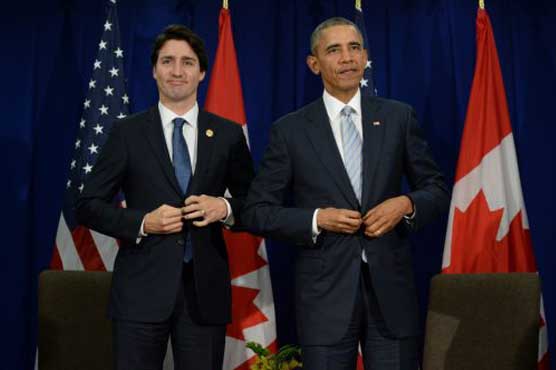
WASHINGTON, (AFP) - Barack Obama welcomed Canada s youthful Prime Minister Justin Trudeau and his "quite good looking Canadian delegation" to the White House Thursday, for a pomp-filled visit designed to rejuvenate US-Canada ties.
Obama laid out a full band and ceremonial guard on the South Lawn of the White House, making the recently elected prime minister the first Canadian leader in 20 years to receive an official-level visit.
The pair will later meet in the Oval office, hold a Rose Garden press conference and a coveted state dinner.
The 54-year-old Obama has saluted Trudeau, 44, as political and generational kin, an ideological bedfellow who shares a belief in the importance of healthcare, gay rights and tackling climate change.
"I m proud to be the first American president to stand with a Canadian prime minister and be able to say that in both our nations, healthcare is not a privilege for a few, but is now a right for all," Obama said, touting his landmark healthcare reforms.
Trudeau echoed those remarks, saying "it s wonderful to see that our American friends and partners share and are working on the exact same objectives."
But there was some ribbing when Obama joked about national rivalries over whose beer is best and Canada s national obsession, ice hockey.
"Where s the Stanley Cup right now?" Obama teased. "I m sorry, is it in my hometown with the Chicago Blackhawks?"
Trudeau hit back that the team s trio of superstars -- Patrick Sharp, Jonathan Toews and Duncan Keith -- were among Canada s greatest exports.
"There is no relationship in the entire world like the Canada-US relationship," he said.
Early on Thursday, the White House announced that Canada had agreed to match an existing US target of reducing "methane emissions by 40-45 percent below 2012 levels by 2025 from the oil and gas sector."
The two countries also agreed on measures to better manage the Arctic wilderness, creating low-impact shipping corridors and managing fish stocks.