Summary Fourth Quadrilateral Coordination Group (QCG) meeting is to be held this coming weekend
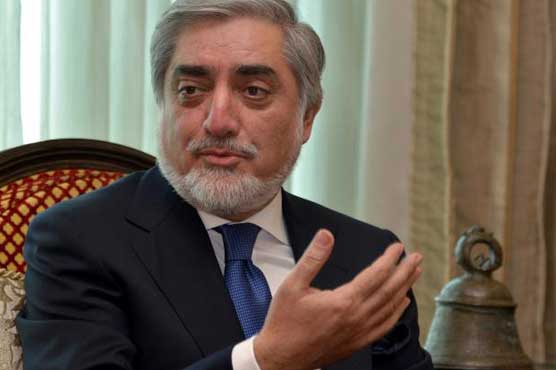
LAHORE (Web Desk) – Afghanistan Chief Executive Abdullah Abdullah is hopeful that quadrilateral group will help in the Afghan peace process however he said that once the dialogue starts, it would be Afghan-led, Indian paper reported Friday.
While talking to Indian newspaper, The Hindu, Abdullah said that he is hopeful that the group’s efforts would get the countries a breakthrough.
Third Quadrilateral Coordination Group (QCG) meeting is to be held this coming weekend.
While answering a question over talks being Afghan-led given that the venue is Pakistan and Inter Services Intelligence (ISI) officials attend the meetings, Abdullah drew a difference between talks with Taliban and talks with the quadrilateral group. He said that the countries which can influence the talks, should, to bring the other party on the table.
However, he reiterated that from there on, the dialogue would be led by Afghanistan.
While talking about suspected links between Indian airbase attack and at Indian mission in Mazar I Sharif, Abdullah said that he could not give a judgment in the matter however, agreed that graffiti at Mazar I Sharif and note left at Pathankot, both mentioned Jaish-e-Mohammad and Afzal Guru.
Quadrilateral Coordination Group includes United States (US), China, Afghanistan and Pakistan. The group aims restoration of peace in Afghanistan.
The first ever round of a quadrilateral meeting was held in Islamabad on January 11.
Adviser to PM Nawaz Sharif on Foreign Affairs Sartaj Aziz, while addressing the opening session had said that the Pakistan wants to further the re-conciliatory process in Afghanistan.
He mentioned the fifth Heart of Asia Conference which was held in December 2015 in Islamabad on the occasion. He termed the conference impetus in laying the needed grounds for restoration of peace in Afghanistan.
Earlier on December 27 2015, Chief of Army Staff (COAS) General Raheel Sharif paid a visit to Kabul and different meetings with Afghan authorities called for better coordination to counter terrorism in neighbouring countries and the region.
The second meeting of the four-nation handshake was held in Kabul on January 18. Foreign Secretary Aizaz Chaudhry represented Pakistan in the sitting.
July 2015 saw Taliban infighting after a faction confirmed death of Mullah Omar. The news came brought along friction between senior leaders and successor of Mullah Omar, Mullah Akhtar Mansour.
The clash led to formation of yet another faction in leadership of Mohamed Rasool.
Since the clash among Taliban factions, leaders of the banned outfit have not come together to decide to either accept talks proposal or not.