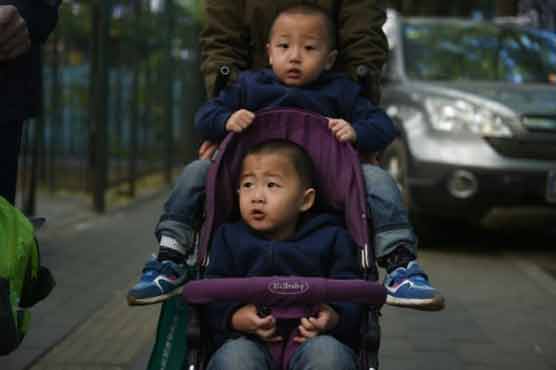
Summary Under the new law, married couples are now allowed to have a second child.
BEIJING (AFP) - Married couples in China will from Friday be allowed to have two children, after concerns over an ageing population and shrinking workforce ushered in an end to the country s controversial one-child policy.
The change, which was announced in October by the ruling Communist Party, takes effect from January 1, 2016, Beijing s official Xinhua news agency reported over the weekend.
The "one child policy", instituted in the late 1970s, restricted most couples to only a single offspring through a system of fines for violators and even forced abortions.
For years, authorities argued that it was a key contributor to China s economic boom and had prevented 400 million births.
Rural families were allowed two children if the first was a girl, while ethnic minorities were allowed an extra offspring, leading some to dub it a "one-and-a-half child" policy.
But it also led to heart-rending tales of loss for would-be parents, and prompted sex-selective abortions or infanticide targeting girls because of a centuries-old social preference for boys.
China s population -- the world s largest at 1.37 billion -- is now ageing rapidly and has severe gender imbalances, all while the country s workforce is shrinking.
Under the new law, married couples are now allowed to have a second child, but the legislation maintains limits on additional births.
Around three million extra babies will be born each year over the next five years as a result, officials from the National Health and Family Planning Commission predicted at a briefing in November.
This would add a total of about 30 million people to the labour force by 2050, officials said.
Still, experts say the shift is likely too little, too late to address China s looming population crisis.
Others warn that many Chinese couples do not want more children, particularly given the expense, and the effects of the change remain unclear.