Summary Victims, all male passengers, were plucked from their vehicles in Balkh province and shot dead
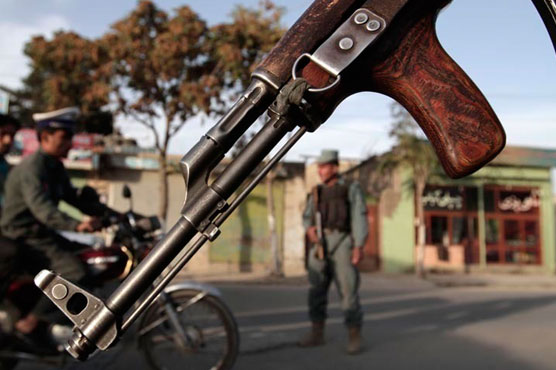
MAZAR-I-SHARIF (AFP) - Gunmen Saturday killed 13 minority Hazaras travelling in two vehicles in a usually tranquil northern Afghan province, as President Ashraf Ghani implored international donors for renewed support for his "wounded country".
The victims, all male passengers, were plucked from their vehicles in Balkh province and shot dead from close range in a rare fatal attack targeting ethnic minorities.
No group immediately claimed responsibility for the incident, but it comes as Taliban insurgents ramp up attacks amid a bitter leadership transition.
"The gunmen stopped two vehicles, lined up all the male passengers and shot them dead," said Jafar Haidari, the governor of Zari district in Balkh, where the incident occurred.
"They spared the life of one woman who was in one of the vehicles. All the victims were Hazaras."
Abdul Razaq Qaderi, the deputy police chief of Balkh, confirmed the fatalities, adding that officials were investigating who was behind it.
Balkh is a relatively peaceful province but Saturday s killings marked the second major fatal incident this year in Zari district.
In June gunmen killed nine Afghan employees of Czech aid organisation People in Need (PIN) in their beds during an overnight raid on their guesthouse in the district.
Attacks targeting Shiite minorities in Afghanistan are not unheard of, but rare compared to neighbouring Pakistan.
Masked gunmen seized 31 Hazaras from a bus in the southern Afghan province of Zabul in late February as they were returning from Iran.
Nineteen of them were released in May in exchange for scores of Uzbek militant fighters held in government prisons.
Ethnic Hazaras, Shiite descendants of Genghis Khan, suffered extensively under the Sunni Taliban.
- Long-term endeavour -
Saturday s killings came as Ghani urged international donors for their continued support, saying the country faced a host of security and economic challenges.
"Rebuilding Afghanistan is going to be a long-term endeavour," Ghani said at a conference of donors in Kabul attended by Western delegates and non-governmental organisations.
"Afghanistan is a wounded country. Widespread unemployment, a violent insurgency, and the advance of extremism across the region are increasing the likelihood that (our) economic reform agenda will be undone by political unrest."
Donors have pledged billions of dollars over the past decade to reconstruct the war-torn country.
But a lot of that money has been lost to corruption, which permeates nearly every public institution, hobbling development and sapping already overstretched state coffers.
Human Rights Watch urged donors ahead of the conference to press the Afghan government on the persistent human rights problem.
"Afghan officials and foreign donors need to put human rights front-and-centre in all discussions of ongoing and future support for the Afghan government," said the group s deputy Asia director Phelim Kine.
Taliban insurgents are stepping up their summer offensive launched in late April amid a simmering leadership succession dispute after the confirmation of longtime chief Mullah Omar s death.
Mullah Akhtar Mansour, a trusted deputy of Omar, was named as the insurgents new chief in late July, but the power transition has been acrimonious.
Afghan security forces, stretched on multiple fronts, are facing their first fighting season without the full support of US-led NATO forces.
NATO ended its combat mission in Afghanistan last December and pulled out the bulk of its troops although a 13,000-strong residual force remains for training and counter-terrorism operations.