Summary Ukraine, since its independence in 1991, has gone through worst political crisis and bloody turmoil.
KIEV (AFP) - Ukraine s worst political crisis since its independence in 1991 has witnessed a full year of bloody turmoil.
Here are key dates of a conflict that has already seen Russia seize a chunk of its western neighbour s territory and sparked the worst standoff in East-West relations since the Cold War:
2013
November 21: Ukraine s Kremlin-backed government suspends talks on an association agreement with the European Union in favour of closer ties with Moscow.
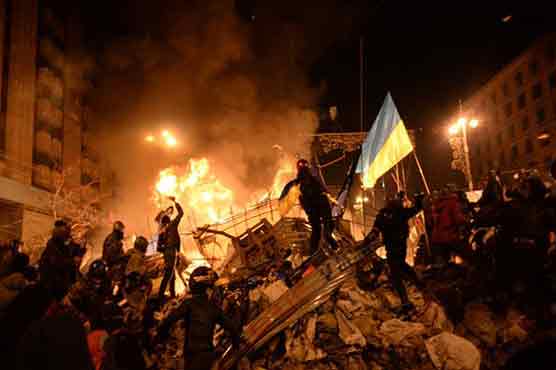
The decision triggers three months of demonstrations in Kiev s central Independence Square, known as the Maidan, and western Ukrainian cities where pro-European sentiment runs strong.
2014
January 21-22: Fierce clashes between security forces and demonstrators leave several protesters dead.
February 18-20: Bloodshed erupts, with a failed crackdown by authorities on the protests killing over 100 people.
February 22: President Viktor Yanukovych, accused of ordering the police to open fire on civilians, flees to Russia and is ousted by parliament.
March 1: Russian troops and pro-Moscow forces begin seizing ports and cities in the Black Sea peninsula of Crimea.
March 16: Crimean residents, mostly Russian speakers, vote to join Russia in a referendum that Kiev and the West do not recognise.
March 20: Russia s parliament ratifies a treaty incorporating Crimea into Russia. President Vladimir Putin then seals the deal.
April 6: Pro-Moscow demonstrators seize government buildings in towns and cities in Ukraine s Russian-speaking east, including Donetsk and Lugansk.
April 13: Kiev announces the launch of an "anti-terrorist" operation in the east.
May 11: Voters call for independence in referendums in Lugansk and Donetsk, rejected as illegitimate by Kiev and the West.
May 25: Ukraine s presidential election is won by Petro Poroshenko.
June 27: The EU and Ukraine sign the association agreement whose rejection had sparked the initial unrest.
July 17: Malaysia Airlines flight MH17 is shot down over rebel-held territory, killing 298 people.
July 29: The EU and the United States broaden sanctions on Russia, which later bans most US and EU food imports.
August 25: Rebels mount a counter-offensive in the southeast, reportedly backed by Russian troops and heavy weapons.
September 5: Ceasefire signed in Minsk but violence continues.
October 26: Pro-West parties win big in a general election boycotted in the east.
October 30: In Brussels, Russia and Ukraine forge a gas supply agreement after fraught negotiations.
November 2: Separatists in eastern Ukraine vote in Russian-backed leadership elections that Kiev and the West refuse to recognise.
November 12: NATO accuses Russia of sending fresh columns of tanks, troops and military hardware into Ukraine.
2015
January 22: Donetsk airport falls to rebels after months of intense fighting.
February 12: The rival sides agree a peace roadmap during marathon talks in Minsk, backed by the leaders of France, Germany, Russia and Ukraine.
The IMF and Ukraine agree a $17.5 billion financial deal for Kiev, bringing total international assistance over four years to $40 billion.
February 15: The ceasefire comes into force but both sides trade accusations of breaches.
February 16: The EU ratchets up sanctions on Russia and Ukrainian separatist figures.
February 17: Fierce street battles break out in the strategic railway hub of Debaltseve between Donetsk and Lugansk, where government forces are surrounded by rebels.
February 18: Government forces withdraw from Debaltseve.
February 19: The leaders of Ukraine, Russia, Germany and France hold talks to try to salvage the tattered ceasefire.