Summary Critics urged the panel to reject any move that could increase the risk of HIV in blood supply.
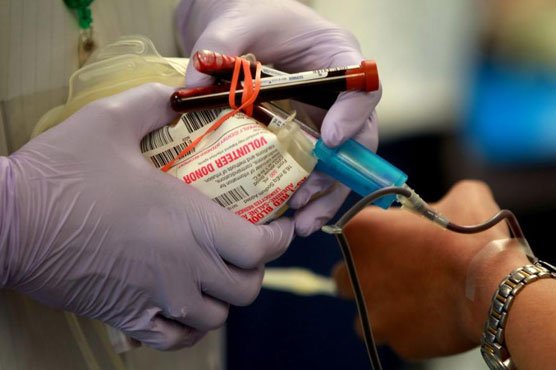
WASHINGTON (AFP) - A US ban on blood donations by gays could be eased after 31 years, depending on the decision of a Food and Drug Administration advisory committee that began two days of meetings Tuesday.
Current US law bars any man who has had sex with a man -- even once since 1977 -- from donating blood.
The restrictions were established in 1983 when the AIDS epidemic was spreading quickly in the gay community, sparking widespread fear about the deadly infection, which was then poorly understood.
But now, some experts say that the restrictions are outdated, and that sophisticated tests for human immunodeficiency virus (HIV) exist, which can make blood donation by gay men a much safer practice.
When the committee makes its recommendation Wednesday -- advice the FDA does not have to follow but typically does -- the ban could be lifted or relaxed, or not changed at all.
An advisory committee to the Health and Human Services Department recently recommended replacing the ban with a 12-month deferral period for men who have had sex with men in that time.
In that case, sexually active gay men would still be prohibited from donating blood, but those who have not engaged in sex with other men in the past year would be allowed to donate.
Jason Cianciotta, director of public policy at Gay Men s Health Crisis, said such steps would not eliminate the stigma or discrimination associated with the ban on gays.
"While the proposed change from a lifetime ban to a 12-month deferral is a step forward, it does not go far enough," he said during the public comment portion of the FDA advisory meeting near the US capital on Tuesday.
"Any deferral based on a sexual orientation label -- MSM (men who have sex with men), gay or bisexual -- still perpetuates the harmful and unscientific notion that HIV is transmitted because of who you are rather than what you do."
He also described a policy requiring 12 months of abstinence as a "de facto lifetime ban" for most gay and bisexual men.
"We advocate for a system that screens all donors, gay or straight, for high-risk practices that could lead to HIV infection," he said.
However, critics urged the panel to reject any move that could increase the risk of HIV in the blood supply.
"I urge you to oppose any change," said Peter Sprigg, senior fellow for policy studies at the Family Research Council, a conservative group.
"Unless it can be scientifically proven that a revised policy would result in no increase in risk to the blood supply. Even a small increase in risk is unacceptable," he told the committee.
"Let us not forget the dramatic magnitude of the increased HIV risk in this population."