Summary US President Barack Obama faced demands for a new US strategy on the deepening crisis in Iraq.
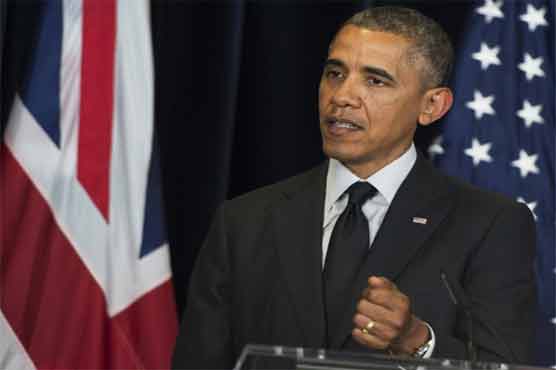
WASHINGTON (AFP) - US President Barack Obama faced demands for a new US strategy on the deepening crisis in Iraq on Wednesday, as the White House insisted he had not ruled out Baghdad's request for air strikes.
But there were no signs that renewed military action was imminent in a war that Obama had declared at an end, as the president mulled a range of options drawn up by his advisors.
The White House, pushing back on reports that said that Obama had decided that no strikes would take place immediately, said that he had yet to discount direct military action.
"The only thing the president has ruled out is sending troops back into combat in Iraq, but he continues to consider other options," White House spokesman Jay Carney said.
"Work is being done that will help us see with more clarity what the options available to the president are," Carney added, when asked to clarify whether Obama had ruled out air strikes.
Obama's other options include a possible drone campaign against Islamic State of Iraq and the Levant (ISIL) fighters or stepped up assistance and training to Iraqi government forces.
One official said that, while there was rampant speculation in Washington about US responses to the seizures of vast swathes of territory in Iraq by ISIL, Obama "has not made a decision."
Before any action in Iraq, Washington is also demanding Shiite Iraqi Prime Minister Nuri al-Maliki show a new spirit of political inclusion.
The opinion is hardening here that official persecution of the minority Sunni community eased the takeover of Sunni areas by an extremist group branded extreme even by Al-Qaeda.
Earlier, the top US military officer, General Martin Dempsey, the chairman of the Joint Chiefs of Staff, blamed the Iraqi government for the deepening sectarian mire.
"There is very little that could have been done to overcome the degree to which the government of Iraq had failed its people.
"That's what has caused this problem," Dempsey told lawmakers when asked if the United States could have taken action to counter the advance of Sunni militants.
He said US warnings to Maliki's government of the risks of alienating rival religious communities had simply been ignored.
Earlier, Iraq had officially requested US air support against the rebels which have occupied some key cities, including Mosul and other strategic targets, during an eight-day offensive.
Obama met Democratic Congressional chiefs Senate Majority leader Harry Reid and House minority leader Nancy Pelosi and Republican party bosses, House Speaker John Boehner and Senate minority leader Mitch McConnell.
The meeting took place against revived and fierce political debate, with Republicans saying Obama had squandered the gains of a bloody war that was essentially won when he pulled out all US troops in 2011.
Democrats charge that former president George W. Bush blew the lid off Iraq's bottled up sectarian stew by invading the country in 2003 and that Maliki threw away a chance for a stable future for Iraq wrought by US blood and treasure.
"What I'm hoping to hear from the president today is the broader strategy for how we help keep the freedom that we paid dearly for for the people of Iraq," said Boehner before the Oval Office talks.
Boehner also rejected the idea floated by some in the administration that common strategic goals could see Washington and Iran working together to save Iraq -- though officials say military cooperation is not on the table.
The row over what to do about the current crisis in Iraq, also drew in an venerable combatant: former vice president Dick Cheney, who penned a savage critique of Obama's foreign policy on the opinion page of the Wall Street Journal.