Summary The polls suggest mainstream parties will hold about 70 percent of the seats in the next parliament.
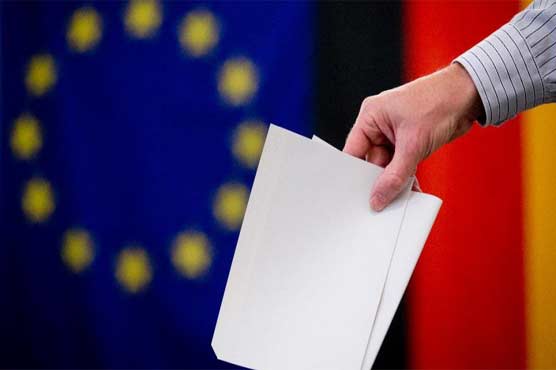
BRUSSELS (AFP) - Europeans voted in EU parliamentary electons on Sunday, the final day of a massive process expected to give eurosceptic parties a boost.
Twenty one EU member states -- including France, Germany and Italy -- headed to the polls to end four days of voting which began in Britain and the Netherlands on Thursday.
Greece, Romania and Lithuania got the voting underway at 0400 GMT but no results will be announced in any of the countries until all polling is finished at 2100 GMT.
If opinion polls prove correct, the eurosceptic parties could treble their presence to around 100 seats in the new 751-seat EU assembly.
In Denmark, France and Italy, anti-EU parties are poised to take first or second place Sunday, shaking up national politics and preparing to battle Brussels from the inside.
In Britain, the eurosceptic UK Independence Party (UKIP) led by Nigel Farage -- a party without a single seat in the national parliament -- surged Thursday in local council polls held in parallel with the EU vote, rocking the establishment.
Turnout too is likely to reflect growing popular exasperation with the EU, dropping even further from the record low of 43 percent in 2009.
"There is a legitimacy problem," Carnegie Europe director Jan Techau told AFP.
"But a win for the fringe parties won t derail or change the way the parliament works." Techau said.
The polls suggest mainstream parties, the centre-right conservatives and centre-left socialists, will hold about 70 percent of the seats in the next parliament.
Traditionally they have worked together much of the time and should be able to continue to do so, analysts said.
- Democratic deficit -
Faced by mounting hostility to the Brussels bureaucracy and the harsh austerity policies adopted to overcome the debt crisis, EU political leaders have worked hard to correct a so-called "democratic deficit".
For the first time, the five main groups in parliament named candidates to be the next head of the powerful European Commission and sent them out on the campaign trail.
They also organised televised debates between the candidates, exposing them to the harsh light of public questioning.
Summing up the hopes of reconnecting with the bloc s 500 million people, a giant banner hung at EU headquarters in Brussels read: "This time it s different -- Your vote counts."
Analysts have their doubts, however, on that point.
"The European Parliament s bid to politicise and personalise the vote has not worked," said Jean-Dominique Giuliani of the Robert Schuman Foundation.
Instead, the eurosceptics and more radical groups have picked up support on anti-immigrant and anti-EU issues made doubly sensitive when 26 million people are out of work, including more than half those under 25 in countries such as Greece and Spain.
"It s clear that these elections cannot just go on like this because people simply do not consider the European parliament to have political weight," Techau said.
"There will have to be substantial reforms."
- Fears in Eastern Europe -
In contrast in Eastern Europe, the Ukraine crisis and fears of a resurgent Russia appear to have bolstered the attraction of EU ties and the security they offer.
In Lithuania, 44-year-old civil servant Jurate Kiserauske said the EU "is our only salvation and future. If we are not there, we would not remain where we are but we would return back to Russia, to the Soviet Union".
Among the early voters in Romania on Sunday, which only joined the EU in 2007, was pensioner Didina Nicolae, 78.
"I went to vote because I want Romania to become a true European country with a higher standard of living," she told AFP.
On Saturday, Czech Republic voters backed three pro-EU parties, while in Latvia, a rightwing anti-EU party -- the National Alliance -- trailed in third.
A recent Pew Research Centre poll showed 72 percent support for the EU in Poland, for instance.
Overall, the latest PollWatch survey forecast victory at the ballot-box to the centre-right European People s Party (EPP), on 217 seats in the EU parliament against 201 for the Socialists and Democrats (S&D).
While that would leave the mainstream groups still the two biggest parties, the EPP would be down from 35.8 percent to 28.9 percent of total seats, and S&D up marginally from 25.6 percent to 26.8 percent.
In third place, the centrist Liberals (ALDE) would fare especially badly, falling to 59 seats.
The radical left parties as a whole, currently the sixth biggest group in the parliament, are expected to climb to fourth place with 53 seats.
That would put them ahead of the Greens, with 44, followed by an existing eurosceptic group made up of British and Polish conservatives, the European Conservatives and Reformists (ECR), with 44.
"The new parliament would be more polarised," said analysts VoteWatch.