Summary Iraq has grappled with an extended spike in violence, with more than 800 people killed this month.
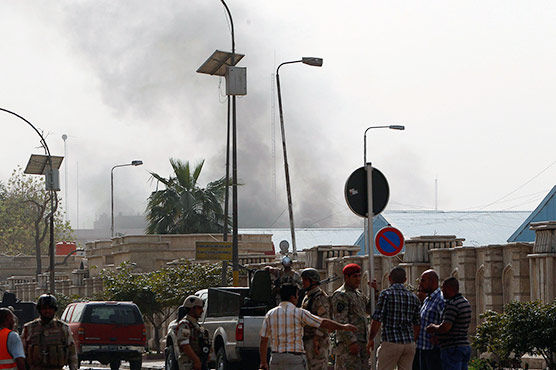
BAGHDAD (AFP) - Shelling and bombings across Iraq killed 15 people on Saturday as militants bombed a key bridge linking the capital to north Iraq, the latest in a surge of nationwide violence.
The latest bloodshed, which pushed the death toll for January to more than 800, comes just months ahead of parliamentary elections slated to take place on April 30, and has stoked fears Iraq is slipping back into all-out conflict.
Faced with a weeks-long standoff in Anbar province west of Baghdad and Iraq s worst protracted unrest since 2008, authorities have been urged by foreign leaders to pursue political reconciliation in a bid to undercut support for militants.
But Iraqi Prime Minister Nuri al-Maliki has taken a hard line, and officials have trumpeted security operations.
Shelling began late on Friday in the south Fallujah neighbourhood of Nazal and continued into the early hours of Saturday, killing eight people, including a young child, and wounding seven, said Doctor Ahmed Shami at the city s main hospital.
Residents of the city on Baghdad s doorstep blame the army for the shelling. Defence officials insist the military is not responsible.
Security officials meanwhile said they killed 20 militants in the Albu Faraj area near Anbar provincial capital Ramadi, according to a report broadcast on state TV.
Fallujah and parts of nearby Ramadi have for weeks been in the hands of anti-government fighters, including the Al-Qaeda-linked Islamic State of Iraq and the Levant (ISIL).
It is the first time militants have exercised such open control in Iraqi cities since the peak of the violence that followed the 2003 US-led invasion.
Fighting erupted in the Ramadi area on December 30, when security forces cleared a year-old Sunni Arab protest camp.
The violence then spread to Fallujah, as militants moved in and seized the city and parts of Ramadi after security forces withdrew.
The government often says it is fighting Al-Qaeda while Fallujah residents and tribal sheikhs have said ISIL has tightened its grip on the city. But other militant groups and anti-government tribes have also been involved in battling government forces in Anbar.
The protracted standoff has forced more than 140,000 people to flee their homes, the UN refugee agency said on Friday, with UNHCR spokesman Peter Kessler calling this the worst displacement in Iraq since the 2006-08 sectarian conflict.
Violence on Saturday also struck in the capital, and north of Baghdad.
A mortar attack in Jaizan, a Shiite village just north of the confessionally-mixed city of Baquba, killed six people and wounded two others, security and medical officials said.
Among the fatalities were two women and a young boy.
Baquba is the capital of Diyala province, which is home to a Sunni majority with substantial Shiite Arab and Kurdish populations. The province remains one of Iraq s least stable and is regularly the site of violent attacks.
Separate car bombs in two Sunni-majority neighbourhoods of Baghdad left one person dead and more than a dozen wounded.
Militants also bombed a major bridge north of the capital that is a key throughfare linking Baghdad to Kirkuk and the northern Kurdish region, officials said.
The blast, which completely destroyed a 20-metre (yards) section of the bridge, did not cause any fatalities but five people were wounded when their car careened off it immediately following the explosion.
Iraq has grappled with an extended spike in violence, with more than 800 people killed so far this month, according to an AFP tally, more than three times the toll for January 2013.