Summary John Kerry on Sunday defended US negotiations with Iran over its nuclear programme.
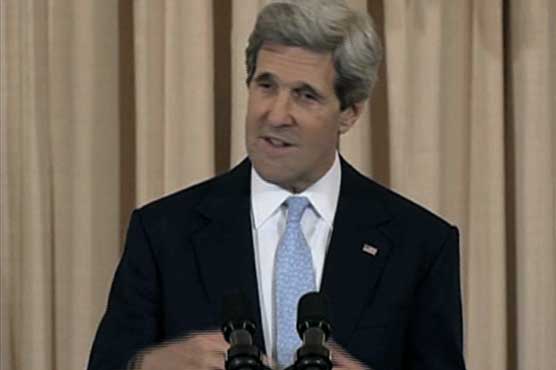
WASHINGTON (AFP) - Secretary of State John Kerry on Sunday defended US negotiations with Iran over its disputed nuclear program, saying Washington is "not blind" and is keeping Israel s best interests at heart.
The top US diplomat insisted there is "zero gap" between President Barack Obama s administration and its commitment to Israel, with diplomatic relations between the two allies under strain over the matter.
Kerry made his remarks in an interview with NBC s "Meet the Press" show after talks with world powers in Geneva failed to produce a deal to curb Tehran s atomic activities in exchange for sanctions relief.
"We are not blind, and I don t think we re stupid," Kerry said.
"I think we have a pretty strong sense of how to measure whether or not we are acting in the interests of our country and of the globe, and particularly of our allies like Israel and Gulf states and others in the region."
Three grueling days of discussions with the United States, China, Russia, Britain, France and Germany, known as the P5+1, ended with no agreement but the two sides will meet again on November 20.
Hopes had soared for a deal after top diplomats rushed to Geneva to join the talks, but faded after cracks began to show when France raised concerns.
Israeli Prime Minister Benjamin Netanyahu slammed what he said was "not a good deal" for any of the parties -- with the exception, he said, of Tehran.
"Iran gives practically nothing and it gets a hell of a lot. That s not a good deal," Netanyahu told CBS "Face the Nation" show.
"It s not good for us, it s not good for America, it s not good for the Middle East, it s not good for Europe either."
But Kerry pushed back, saying "there is zero gap between this president, between this administration and our commitment to Israel," despite continued criticism of the talks by its top Mideast ally.
Kerry told NBC that the United States is "absolutely determined that this would be a good deal, or there ll be no deal."
"We re talking about stopping their program where it is, with enough guarantees to know that it is in fact stopped where it is, while we then negotiate the full measure of the deal with our allies," he said.
Meanwhile, hawkish Republican Senator Lindsey Graham, a leading voice in the US Congress on defense and security matters, warned against easing sanctions on the regime in Iran, saying Sunday it could have dire consequences.
"My fear is that we re going to wind up creating a North Korea-type situation in the Mideast, where we negotiate with Iran and one day you wake up... and you re going to have a nuclear Iran," Graham said on CNN s "State of the Union" show.
Conservative US politicos were jubilant that the deal had fallen through for now, and although fond of finger-pointing at France in recent years, lavished praise on Paris.
"Vive la France!" Senator John McCain, an outspoken voice on national security issues, tweeted.
"France had the courage to prevent a bad nuclear agreement with Iran," said the top Republican and former presidential candidate.
Another leading lawmaker, Bob Corker, senior Republican on the Senate Foreign Relations Committee, said Washington is "dealing away our leverage" in the talks.
"All of us want to see diplomacy... but we re also concerned about an administration that seems really ready always to jump into the arms of folks, and potentially deal away some of the leverage we have," he said.
The draft deal said to be on the table could have seen Iran freeze parts of its nuclear program in exchange for the easing of some of the sanctions on its battered economy.
French Foreign Minister Laurent Fabius was the first to reveal that a deal had failed, preempting the official announcement after the talks broke up.