Summary The 51-year-old leader first came to power in a 2003 vote following the death of his father Heydar.
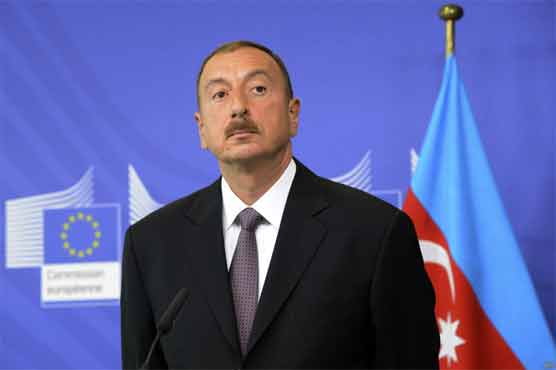
BAKU (AFP) - Without ever hitting the campaign trail, Azerbaijan s President Ilham Aliyev is coasting to a third term in an election that critics say has been preceded by a wide crackdown on his foes.
Few signs of election season can be seen around the oil-rich Caspian Sea nation, with campaign posters limited to sanctioned locations and state television barely mentioning Wednesday s presidential vote.
"The outcome is not in doubt," said Alex Nice, a Caucasus analyst at the London-based Economist Intelligence Unit.
"Ilham Aliyev should win comfortably in the first round."
The 51-year-old leader first came to power in a 2003 vote following the death of his father Heydar, a former KGB officer and Communist-era boss who had ruled the country for 10 years.
Aliyev was re-elected in 2008 with 89 percent of the vote in a poll Western observers refused to call free and fair.
Now, after a disputed 2009 referendum allowed Aliyev to run again, opinion polls again give the incumbent more than 80 percent of the vote as he bids to extend his family s decades-long grip on power against nine unheralded rivals.
Aliyev has opted not to campaign, refusing to join televised debates or hold public rallies. Those backing him argue that the president s economic record speaks for itself.
Fuelled by billions of petrodollars, living standards in the former Soviet nation of 9.5 million people have risen steadily in the past decade, with Azerbaijan becoming an increasingly important energy supplier to Europe.
"The people of Azerbaijan want stability, development and a leader that can represent Azerbaijan at the highest level," said ruling party lawmaker Mubariz Gurbanli, who is heading Aliyev s shadow campaign.
"Aliyev combines all these qualities."
Yet his foes argue that Aliyev s cruise to another five-year term rests on a renewed clampdown on dissent, with scores of his rivals jailed on charges ranging from drug to weapon possession, which the opposition says are fabricated.
During a rare outburst of public discontent earlier this year, authorities used force to suppress a spate of anti-government protests, including several days of rioting in the town of Ismayilli that targeted government buildings.
Achieved through falsification
================================
Normally fragmented, Azerbaijan s weakened opposition -- much of which boycotted the 2008 poll -- in May sparked hope of a major challenge by agreeing to rally around a single challenger.
Initially that choice settled on the Oscar-winning screenwriter Rustam Ibragimbekov. But when his candidacy was rejected by authorities over his dual Russian citizenship, the opposition switched to historian and former lawmaker Jamil Hasanli.
Hasanli, who has managed to mobilise thousands of supporters at rallies but is only expected to poll in the single digits, has campaigned on a pledge to step down after two years if elected and switch Azerbaijan to a parliamentary system.
In pre-election debates against the other eight challengers to Aliyev, Hasanli, 61, has accused the president of allowing corruption to flourish, and charged that only vote-rigging and a skewed playing field can see the incumbent re-elected.
"Ilham Aliyev s so-called victories have only ever been achieved through falsification," Hasanli told AFP.
Aliyev for his part is expected to continue treading a cautious path between the West and Russia, ensuring that Azerbaijan remains a key energy source for Europe while not upsetting its giant northern neighbour.
At home however, with oil production peaking and new natural gas fields yet to come online, analysts say that Aliyev will have a harder time keeping rising anger over corruption and inequality in check.
"Average wages rose by over 10 percent a year in real terms in 2003-12 -- those kinds of growth rates will never be achieved again," said Nice from the Economist Intelligence Unit.
"So the authorities will have to manage expectations carefully, and focus on improving the quality of public administration and services if they want to head off discontent."