Summary Scrap of upper house of parliament would have saved bailed-out eurozone nation millions of euros.
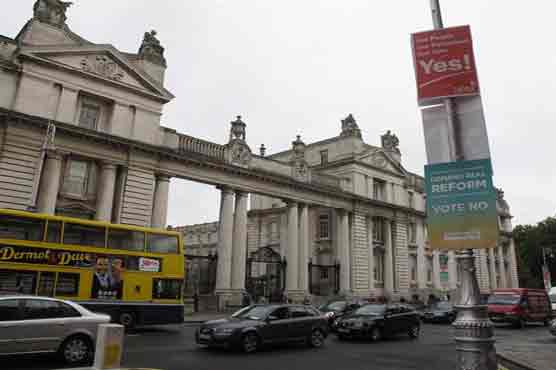
DUBLIN (AFP) - Ireland has narrowly rejected a proposal to scrap the upper house of parliament that would have saved the bailed-out eurozone nation millions of euros, referendum results showed Saturday.
Final results revealed 51.7 percent in favour of keeping the Senate, while 48.3 percent backed Prime Minister Enda Kenny s controversial proposal -- handing an embarrassing defeat to the coalition government.
Ireland voted Friday on whether to scrap the Seanad, or Senate, which Kenny described as elitist and undemocratic, saying its closure could save the nation 20 million euros ($27 million) year.
Opinion polls had suggested voters would likely back Kenny s proposal, which had the support of the coalition government parties and some of the opposition. The turnout at the polls stood at just 39.2 percent.
Kenny had taken many by surprise, even those in his own Fine Gael party, when he announced in the run-up to the last general election that he would put plans to scrap the upper house to the people.
Opponents of Kenny s plan admitted that the 60-member upper house in its current form did not work but said it should be reformed rather than closed.
But critics accused Kenny s party of hiding behind a promise of savings to centralise power in the government s hands -- and closing the door on wider political reform.
In a message posted on YouTube Thursday, Kenny pointed out that other European Union nations had scrapped their upper houses without any negative effect on their democracies.
A separate vote on whether to establish a new Court of Appeal has also taken place, with Dublin hoping the new institution will ease the heavy pressure on the heavily backlogged Supreme Court.
Historically, many senators tend to be politicians who failed to gain a seat in a general election or those hoping to win a seat in the lower house at a future election.
The upper house is the less powerful house of parliament, often reduced to rubber-stamping legislation from the lower house. Its ability to delay bills passed by the lower house for 90 days is its most powerful function, but that has only occurred twice in 75 years.
Most of the Senate members are elected from vocational panels by local councillors and by university graduates. Eleven are appointed by the prime minister, generally ensuring a government majority.
The referendum vote came ahead of another austerity budget in Ireland on October 14, almost three years since it entered an European Union-International Monetary Fund bailout in November 2010.
The IMF on Friday slashed its growth forecasts for Ireland after predicting weaker consumer demand and export growth for the country.
The IMF, which formed a central part of Ireland s international rescue in 2010 that was worth 85 billion euros, said it expects Ireland s economy to grow by 0.6 percent this year compared with a previous forecast of 1.1 percent.
It added that gross domestic product (GDP) was forecast to expand by 1.8 percent next year compared with the Fund s earlier prediction of 2.2 percent.
The downgrades come despite Ireland exiting recession in the second quarter with economic growth of 0.4 percent thanks to solid expansion of its construction and export sectors.
Its economy went through a period of turmoil in the run-up to the 2008 global financial crisis and after, amid soaring government debt, a property market meltdown, banking crisis and surging unemployment.
Ireland had been known as the Celtic Tiger economy for its double-digit growth spanning a decade from the mid-1990s.