Summary Russia opposes US-led airstrikes in response to an alleged use of chemical weapons by Syria.
VIENNA (AFP) - The US and Russia clashed at a UN atomic agency meeting Monday over Moscow s request for an IAEA probe into the risk of US airstrikes on Syria hitting a small reactor.
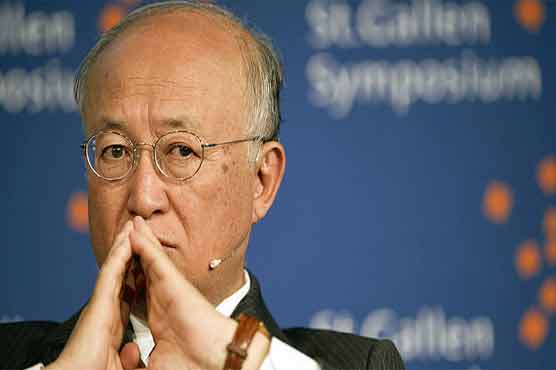
The head of the International Atomic Energy Agency, Yukiya Amano, said meanwhile that there was "not a big amount" of radioactive material at the research reactor in the suburbs of Damascus.
The US ambassador to the IAEA told a closed-door meeting of the watchdog in Vienna that carrying out Russia s request, made last week, was not the UN agency s job.
Joseph Macmanus said that "requests for comprehensive risk analyses of hypothetical scenarios are beyond the IAEA s statutory authority," according to a text of his remarks obtained by AFP.
"The IAEA has never before conducted this type of analysis, it would exceed IAEA s mandate, has far-reaching implications that exceed IAEA capabilities and authorities," he said.
While not mentioning Syria by name, he said the agency "will have to review such a request in light of legal authorities, mandate, and resources and must determine whether there is a scientific basis for conducting a highly speculative investigation of this kind."
Permanent UN Security Council member Russia opposes US-led airstrikes in response to an alleged use of chemical weapons by the regime of President Bashar al-Assad on August 21.
Last week Russia warned that US strikes could have "catastrophic" consequences if the reactor were hit, and has asked the IAEA to conduct a risk analysis.
Amano said on Monday the IAEA was "considering the request" and that the agency had to examine a number of legal, technical and political aspects before responding, telling reporters it was "a complicated issue".
He said however that the reactor contained around one kilo (two pounds) of highly-enriched uranium, saying that this was "not a big amount". He declined to comment however on the possible implications of a military strike.
He added that initial reactions from IAEA member states to Russia s request were "divided".