Summary Opposition rejects decree by Adli Mansour deepens anger of President Morsi's supporters.
CAIRO (AP) - Egypt s interim leadership laid out a fast-track timetable to elect a new president and parliament by early next year, in a move that is almost certain to deepen the anger of ousted President Mohammed Morsi s supporters but could ease Western concerns about the future of democracy in the key Arab nation.
The Muslim Brotherhood rejected a decree issued by Egypt s interim head of state overnight, which set a timetable for new elections and set up a mechanism to amend the constitution.
Senior Brotherhood politician Essam El-Erian said the decree by interim head of state Adli Mansour was "usurping legislative power" and an act of "someone appointed by the putschists".
Mansour s decree issued overnight sets out a timetable that could lead to parliamentary elections in about six months, to be followed by a new presidential election. The constitution would be amended and again put to public vote in a referendum.
The Brotherhood is demanding the military reinstate Mursi as president and has said it will have nothing to do with the military-backed transition.
Under the plan put forward by the interim president late Monday, two panels would be appointed to make amendments to the Islamist-backed constitution passed under Morsi s government.
Those changes would be put to a referendum within about 4½ months. Parliamentary elections would be held within two months after that, and once the new parliament convenes it would have a week to set a date for a presidential election.
The swift issuing of the transition plan reflected a drive on the part of Egypt s military-backed interim leadership to push ahead with a post-Morsi political plan despite Islamist rejection and is certain to further outrage the ousted president s Muslim Brotherhood. The Islamist group contends that Morsi was removed by a coup and that everything that follows is illegal.
The "constitutional declaration" announced by interim President Adly Mansour late on Monday coincided with the nation s deadliest day since Morsi s July 3 ouster, with more than 50 of his supporters killed by security forces as the country s top Muslim cleric raised the specter of civil war.
The killings further entrenched the battle lines between supporters and opponents of Morsi, and the ousted leader s Brotherhood backers called for an uprising, accusing troops of gunning down protesters. The military blamed armed Islamists for provoking its forces.
The shootings began during a protest by about 1,000 Islamists outside the Republican Guard headquarters where Morsi, Egypt s first freely elected leader, was detained last week. Demonstrators and members of the Brotherhood said troops descended on them and opened fire unprovoked as they finished dawn prayers.
"I was in the last row praying. They were firing from the left and right," said Nashat Mohammed, who had come from southern Egypt to join the sit-in and was wounded in the knee. "We said, Stop, we re your brothers. They shot at us from every direction."
After a battle lasting about three hours, at least 54 protesters were killed and 435 injured, most from live ammunition and birdshot, according to prosecutors investigating the killings. Funerals for the victims were expected to be held later on Tuesday, after their bodies were released to their families, prosecutors said.
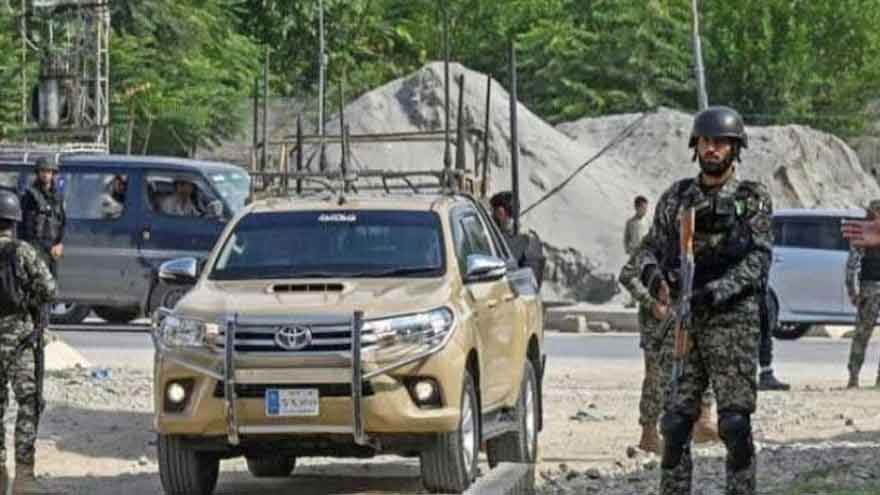
At a nationally televised news conference Monday, Army Col. Ahmed Mohammed Ali said police and troops came under "heavy gunfire" at around 4 a.m. and attackers on rooftops opened fire with guns and Molotov cocktails. A soldier and two policemen were killed, and 42 in the security forces were wounded, eight critically, he said.
While he said troops had a right to defend the facility, Ali did not directly explain how the protester deaths occurred. He expressed condolences but offered no apologies for the deaths.
A collection of videos of the clashes provided by the military to Egyptian TV showed protesters on rooftops lobbing projectiles at troops below, including firebombs and toilet seats.
It also showed some armed protesters firing at close range at the troops, but it did not show what the military did. It was also not clear at what time in the fighting the videos were shot. It included aerial views of the clashes.
Several witnesses from outside the protest said the gunfire started when troops appeared to move on the camp.