Summary As the US Supreme Court prepares to take up same-sex marriage next month.
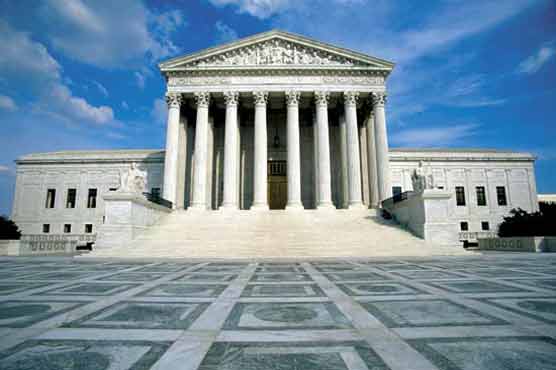
WASHINGTON (Reuters) - As the U.S Supreme Court prepares to take up same-sex marriage next month, laws barring recognition of such unions are not the only issue hanging in the balance. The very question of whether gay people constitute a vulnerable group that needs the court's help in asserting equal rights is also at stake.
Ahead of two high-profile oral arguments in March, backers of gay rights and defenders of more traditional marriage are zeroing in on whether courts should be wary of any laws that target gay people.
The underlying question is whether bans on gay marriage violate the U.S. Constitution's guarantee of equal protection under the law.
The Obama administration is due to weigh in by Friday, its deadline for written submissions in a case questioning the constitutionality of a central part of the 1996 federal Defense of Marriage Act (DOMA), which defines marriage under federal law as being between a man and a woman.
The other case before the nine-member court asks the justices to consider whether Proposition 8, a California ballot initiative that outlawed same-sex marriage, should be struck down. The cases will be argued on March 26 and 27. A ruling is expected by the end of June.
It's unclear how the court will rule, but conventional wisdom is that Justice Anthony Kennedy, the most moderate justice on the conservative wing of the court, will be a deciding vote.
While the court has no obligation to address the bigger gay rights issues raised in the cases, if it does, the justices would first have to consider whether gay people merit the same protections as some other groups that have experienced discrimination.
That finding determines what standard the court will adopt in reviewing the law in question. If it deems that a particular group merits protection, the justices will look at the statute with a more sceptical eye and are more likely to strike it down.
Court rulings in the past have held that, in the face of discrimination, classifications based on race, national origin and gender all require closer "scrutiny," the term the court invokes in discrimination cases.
Any ruling that laws affecting gay people require tough scrutiny has implications that go beyond the two cases before the court. It could influence future cases involving not just gay marriage but also any laws seen to infringe upon gay rights.
"It would be an invitation for lawsuits to pop up in every state of the union," said gay rights legal expert William Eskridge, a Yale Law School professor who is filing a brief urging that the California law be struck down.
Not only would same-sex marriage bans be more legally suspect, but also laws relating to other family matters involving such issues as adoption or custody, he said.
There has been a long history of laws targeting gays and lesbians, gay rights activists say. Homosexual conduct was for a long time illegal in many states.
More recently, various states have passed laws that critics say aim to counter the rise of the gay rights movement.