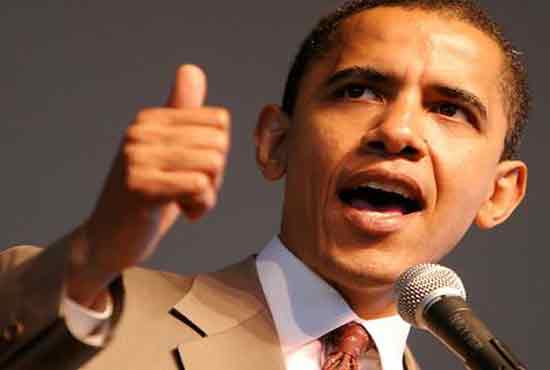
Summary President Barack Obama is likely to bring more reforms in health sector after his re-election.
He was likely to reveal more Wednesday on his opening position in negotiations with Congress on finding a way back from the "fiscal cliff," outlining specifics of his demand that wealthy Americans pay more taxes as part of any deal to start cutting the US government s skyrocketing deficit spending.
The president, newly elected to a second four-year term, campaigned on raising the tax rate for U.S. households making more than $250,000 a year, citing the robust economic growth that accompanied the higher rates for upper-income Americans during Bill Clinton s presidency in the 1990s. Congressional Republicans so far have hinted at a new willingness to allow taxes to rise but insist, in line with party ideology, that rates cannot increase. They envision higher tax revenue through changes to the tax codes.
Unless the White House and Congress reach a deal by Jan. 1, taxes will rise considerably for all Americans, and a series of severe spending cuts for the military and social programs will kick in.
The non-partisan Congressional Budget Office has looked at the effects of falling over the fiscal cliff and projected that they would send the U.S. economy back into recession and cause already stubbornly high unemployment to spike above 9 percent. The CBO also estimates that the austerity program would reduce the deficit by nearly $700 billion by the end of 2013.
After an early afternoon news conference, Obama was meeting Wednesday with about a dozen business executives. On Tuesday he met with labor leaders and liberal groups, telling them he would stand behind his campaign pledge to make the wealthiest Americans pay more in taxes.
"We re prepared to stand up to make sure there is shared sacrifice here, so the rich actually start paying their fair share and the middle class don t get soaked for that," said AFL-CIO labor union federation President Richard Trumka.
Obama will meet with leaders of Congress on Friday.
Obama was heading into negotiations on avoiding the fiscal cliff with what is known as a lame-duck session of Congress, so called because it involves the outgoing legislature. The newly elected membership is sworn in early next year. The present Congress has been criticized as the least productive in recent history.
At issue is an annual U.S. budget deficit that now is routinely above $1 trillion and a national debt that has risen to near $16.5 trillion.
But hanging over the political landscape is the largely unrelated but distracting revelation of marital infidelity that drove former Gen. David Petraeus to resign as CIA director days after the elections. Now the scandal has spread to the top U.S. commander in Afghanistan, Gen. John Allen, who is under investigation for alleged "inappropriate communications" with a Florida woman who received threatening emails from Petraeus former lover.
Washington politicians have just over seven weeks, including breaks for the Thanksgiving holiday next week and the Christmas holiday season, to avert the year-end fiscal cliff.
That outcome barring legislative compromise by Jan. 1 is self-imposed punishment for last year s failure by a bitterly divided Congress and White House to deal with the government s spiraling debt and overhaul its unwieldy tax code.
The big question is how much ground both sides are willing to give after voters endorsed the status quo of divided government
a Democratic president and Democratic-controlled Senate, and a Republican-controlled House of Representatives.
Republicans the low-tax, small-government tea party movement in particular insist that tax rates not be raised for any income level and instead call for even deeper cuts in spending, although the targets of those reductions are unknown.