Updated on
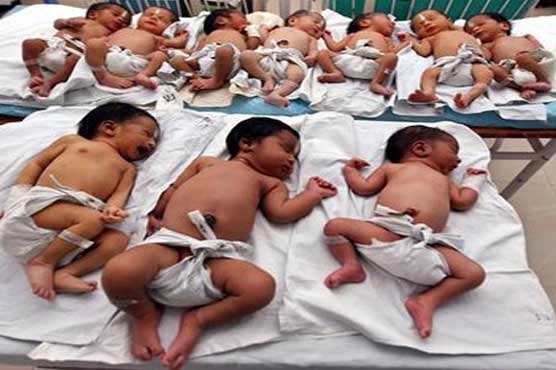
Summary India will witness the birth of the worlds seventh billionth baby in Uttar Pradesh on Monday.
Indian union health minister Ghulam Nabi Azad Sunday said, Its not a matter of joy but a great worry. “We shouldn’t be celebrating the birth of the seventh billionth child. India has 2.4% of the global landmass and around 18% of the global population. For us, a matter of joy will be when our population stabilizes.” Azad said.Azad said that during this decade (2001-2011), India added 18 crore people to its population as compared to 20 crore between 1991 and 2001. Indias total fertility rate (TFR) - the average number of children that would be born to a woman over her lifetime - is 2.6. India expects to reach population stabilization of 2.1 TFR by 2060. Around 20 states have achieved the TFR target and seven more are close to the mark. The main problem is 45% of India’s population is in states that havent achieved the TFR target. Even now, giving birth to children is a sort of entertainment in many parts of India due to lack of other options, Azad said.Population stabilization is a stage when the size of a population remains unchanged. Global population is said to be stabilizing when births equal deaths. Latest data suggests the worst TFR is prevalent in states like Bihar (3.9), Chhattisgarh (3), Jharkhand (3.2), MP (3.3), Orissa (2.4), Rajasthan (3.3), UP (3.7), Uttarakhand (2.6), Assam (2.6) and Gujarat (2.5). States that have achieved the TFR target include Maharashtra (1.9), TN (1.7), Delhi (1.9), Karnataka (2), West Bengal (1.9) and Kerala (1.7).Demographic projections show that if the current status of population growth continues in India, it will cross China as the most populous nation by 2030. The National Population Stabilization Fund says Indias population grew five times in the last 100 years. Projections are that by 2050 India will be home to 1, 613.8 million people as compared to Chinas 1, 417 million. Officials say children who are born because of lack of poor access to contraceptive services is a major cause. The birth of three and above children accounts for 45% of the 26 million births that take place each year. Preference for a male child and high infant mortality accounts for 20% of births.