Summary Citadel steps in to rescue AI-focused hedge fund after massive losses
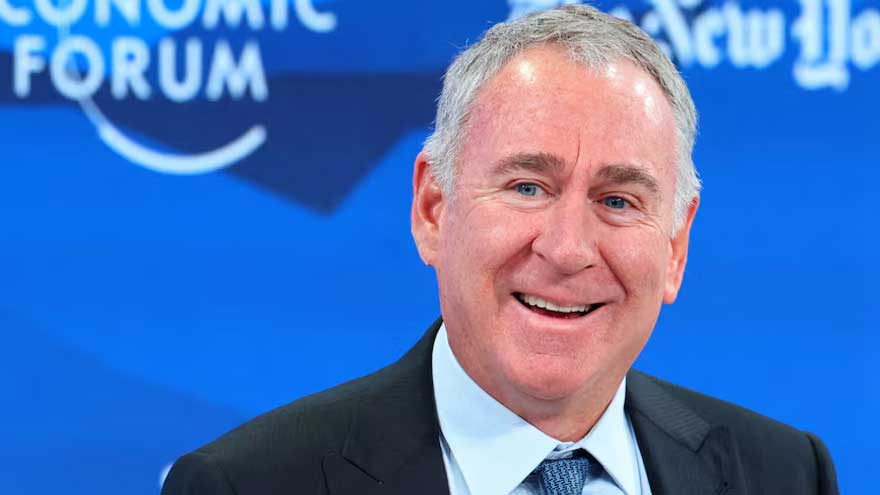
NEW YORK (Reuters) – Billionaire investor Ken Griffin's hedge fund Citadel has stepped in to rescue California-based hedge fund Situational Awareness after the AI-focused investment firm suffered steep losses from falling artificial intelligence stocks.
According to sources familiar with the matter, Citadel quickly investigated the troubled fund after reports emerged on Wall Street that at least one investment firm was facing serious financial difficulties.
By Wednesday morning, Citadel executives had contacted Situational Awareness, and Griffin personally spoke with the fund's founder, Leopold Aschenbrenner, a former OpenAI researcher.
Griffin worked overnight with Citadel co-Chief Investment Officer Pablo Salame, Chief Operating Officer Gerald Beeson, Head of Equity Quantitative Research Perry Vais, and Chief Legal Officer Shawn Fagan to analyse the hedge fund's trading positions and assess the liquidity of its investments.
Following a sharp selloff in AI-related stocks, Situational Awareness lost 67% of its portfolio value in July and was forced to unwind most of its $16 billion public equities portfolio. By Thursday, Citadel had acquired a portion of the fund's holdings.
In a letter to investors seen by Reuters, Aschenbrenner acknowledged the losses, writing, "We let you down."
News of Citadel's intervention quickly spread across Wall Street, with market participants noting that only a handful of firms possessed the financial capacity to absorb such a large amount of risk.
Reuters could not determine how much profit Citadel made from the transaction, although many of the AI stocks involved have since recovered.
Representatives for both Citadel and Situational Awareness declined to comment.
For Griffin, whose hedge fund manages approximately $71 billion in assets, the intervention reflects a long-standing strategy of acquiring distressed assets during periods of market turmoil.
In a 2023 letter to investors, Griffin wrote that Citadel's coordinated approach among business leaders, risk managers and portfolio managers allows the firm to capitalise on opportunities when competitors are forced to sell.
The strategy dates back decades. After Enron's bankruptcy in 2001, Griffin dispatched senior executives to recruit the company's energy traders and analysts, helping build Citadel's commodities business. He adopted a similar approach during the 2007 financial crisis, when Citadel acquired part of the portfolio of Sowood Capital, one of the earliest hedge fund casualties of the global credit crisis.