Summary Mass tourism and unplanned development are putting Cox's Bazar at risk.
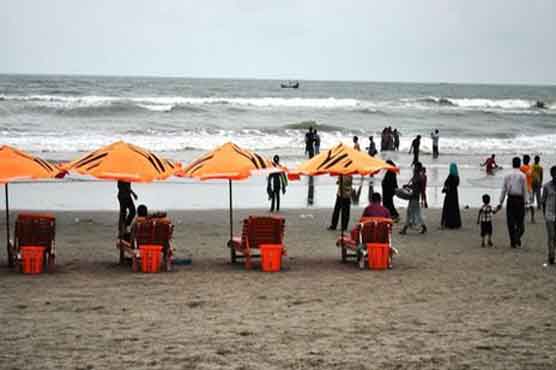
COX S BAZAR: Pristine sandy beaches, coconut palms, sunshine and tropical weather - Cox s Bazar in the south-eastern corner of Bangladesh has everything to make it an ideal holiday destination.
With more than 100km (62.5 miles) of sand, Cox s Bazar has the world s longest uninterrupted natural beach.
Since this long coastal line by the Bay of Bengal has rarely been explored, many feel it has the potential to rival other beach holidays destinations in the region like Pattaya in Thailand or Galle in Sri Lanka.
This tropical paradise is key to the Bangladeshi government s new plans to put the country on the international tourist map. It hopes to earn more than $5bn (£3.17bn) from tourism in the next 10 years by attracting more domestic and foreign visitors.
But a walk along the main beach in Cox s Bazar suggests the ambitious dream of an international tourist attraction may turn sour unless the authorities act fast.
"The whole area is being developed in an unplanned way," said Professor Mushtaq Ahmed, an environmental campaigner in Cox s Bazar.
"The beach area has been encroached and hundreds of buildings have come up there creating a negative influence on the environment."
He says many of the hotels, government buildings and shops that have been built in recent years lack proper planning permission.
Hundreds of new buildings have sprung up in recent years
Until about two decades ago, Cox s Bazar was a sleepy beach town which attracted mostly Bangladeshis looking to escape the noise and pollution of big cities like Dhaka and Chittagong.
However, the entire landscape has changed and hundreds of high-rise hotel buildings, apartment blocks and restaurants have mushroomed in the area.
On the main beach itself, there are dozens of shops selling souvenirs, toys, clothes and fast food.
Hotels and restaurants are being erected in almost every part of the town and in nearby beach areas as the construction boom continues.
Environmentalists fear if the illegally built buildings along the main beach are not removed soon, the area may never recover and its beauty will be lost forever.
They say despite a court order last year to remove all unauthorised structures from Cox s Bazar beach, hundreds of buildings and shops still remain.
But officials say following the court order, the government has formed a committee to identify buildings and other structures which should be removed from the main beach area.
"The problem is many government buildings have also been built on the beach area," Mohammad Monirul Islam, a senior government official said.
"The committee will soon come out with a list of structures which should be demolished."
But the slow pace of the demolition drive has irked many environmental activists who feel precious time is being lost to protect the beach from encroachment and land grabbing.
Bangladeshi Tourism Minister Faruk Khan admits that there has been some unplanned growth in Cox s Bazar, but says the government is taking measures to protect the area.
"We are already building a marine drive from Cox s Bazar to Teknaf and we have given instruction that no building should be built on the southern side of the marine drive that is on the beach.
The problems are not confined to the seaside - nearby hills are also facing threats.
"Trees are being cut indiscriminately on the hillside and lands are also cleared to make way for buildings," Prof Ahmed said.
Officials say the government has taken a series of steps to preserve Cox s Bazar. They say the planned Cox s Bazar Development Authority will monitor and regulate all new building constructions in the region.
But it s not clear whether that alone will be enough to save Cox s Bazar.