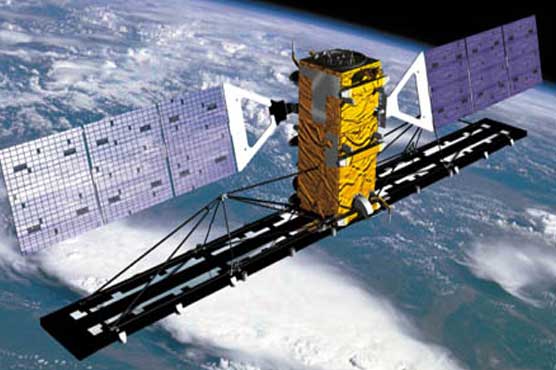
Summary Russian scientists were working to correct the orbit of a communications satellite.
Russian scientists were working to correct the orbit of a communications satellite Sunday after it failed to reach its designated location in space -- the latest setback for the country s once-pioneering space industry.
The mishap was believed to be linked to a malfunction in the Proton-M rocket s Briz-M booster stage, and occurred hours after the rocket blasted off from the Baikonur cosmodrome in Kazakhstan at 1313 GMT Saturday.
Previous problems with the booster type apparently led President Vladimir Putin to fire the chief of a key aerospace bureau earlier this year.
"On December 9, during the placing of Yamal-402 satellite vehicle into designated orbit, the separation of the satellite vehicle occurred four minutes ahead of schedule," Russia s Roskosmos state space agency said in a statement.
The agency said it had taken control of the satellite and was looking to fix the problem after finding all its systems were "functioning in a regular mode".
Scientists were to attempt later Sunday to fix the satellite s orbit by firing up the device s own engines, though such a move would shorten its lifespan, a source in the space industry told the Interfax news agency.
"The situation is unpleasant but not catastrophic," the source was quoted as saying.
Interfax added the satellite could need three days to correct its orbit.
The Yamal-402 satellite was made for Gazprom Space Systems, a space and telecommunications arm of natural gas giant Gazpom, to provide communications for Russia, Western and Central Europe, the Middle East and North Africa.
Problems with the rocket s Briz-M booster stage have bedevilled Russia s space programme this year, which has been beset by a litany of technical problems that saw the loss of a half-dozen satellites and vehicles, including a Russian cargo vessel bound for the International Space Station in July.
Space experts linked the past failures to persisting problems with the Proton-M rocket s Briz-M booster stage.
"The interconnection has been recognised even by Roskosmos management because the general director of this organisation, Vladimir Popovkin, ordered to conduct additional checks into and even temporarily suspend the work of these booster stages," space analyst Yury Karash said on Ekho of Moscow radio.
This weekend s space mishap comes after two satellites were lost after problems following the launch of a Proton-M rocket on August 6, which missed its correct orbit.
Contact was never made with the two telecommunications satellites -- the Russian Express-MD2 and the Indonesian Telkom-3.