Updated on
Summary Global warming: thousands of fish die as Midwest streams heat up.
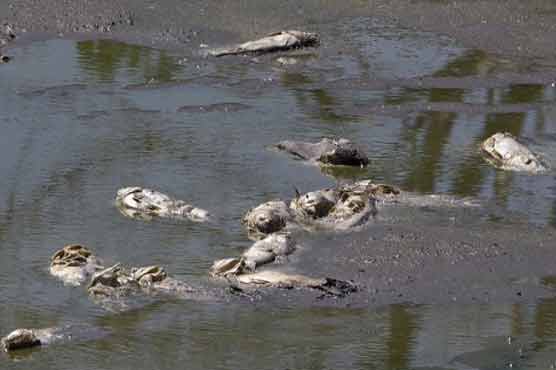
An analysis by a top government scientistsays the extreme heat and drought seen in the U.S., Europe and other regions in recent years must be global warming. Specifically the study by NASA scientist James Hansen blames climate change for last years drought in Texas and Oklahoma, the 2010 heat wave in Russia and the 2003 European heat wave that led to tens of thousands of deaths.Hansen told The Associated Press in an interview that the world is now experiencing scientific fact.Hansens research is respected by other climate scientists. But he is also an activist who has pushed for curbing greenhouse gases. Some experts dont expect the new study to change any minds. Hansens work was published online Saturday in the Proceedings of the National Academy of Science.Thousands of fish are dying in the Midwest as the hot, dry summer dries up rivers and causes water temperatures to climb in some spots to nearly 100 degrees.About 40,000 shovelnose sturgeon were killed in Iowa last week as water temperatures reached 97 degrees. Nebraska fishery officials said theyve seen thousands of dead sturgeon, catfish, carp, and other species in the Lower Platte River, including the endangered pallid sturgeon.And biologists in Illinois said the hot weather has killed tens of thousands of large- and smallmouth bass and channel catfish and is threatening the population of the greater redhorse fish, a state-endangered species.So many fish died in one Illinois lake that the carcasses clogged an intake screen near a power plant, lowering water levels to the point that the station had to shut down one of its generators.Its something Ive never seen in my career, and Ive been here for more than 17 years, said Mark Flammang, a fisheries biologist with the Iowa Department of Natural Resources. I think what were mainly dealing with here are the extremely low flows and this unparalleled heat.The fish are victims of one of the driest and warmest summers in history. The federal U.S. Drought Monitor shows nearly two-thirds of the lower 48 states are experiencing some form of drought, and the Department of Agriculture has declared more than half of the nations counties — nearly 1,600 in 32 states — as natural disaster areas. More than 3,000 heat records were broken over the last month.Iowa DNR officials said the sturgeon found dead in the Des Moines River were worth nearly $10 million, a high value based in part on their highly sought eggs, which are used for caviar. The fish are valued at more than $110 a pound.Gavin Gibbons, a spokesman for the National Fisheries Institute, said the sturgeon kills dont appear to have reduced the supply enough to hurt regional caviar suppliers.Flammang said weekend rain improved some of Iowas rivers and lakes, but temperatures were rising again and straining a sturgeon population that develops health problems when water temperatures climb into the 80s.Those fish have been in these rivers for thousands of thousands of years, and theyre accustomed to all sorts of weather conditions, he said. But sometimes, you have conditions occur that are outside their realm of tolerance.