Summary Population growth and uneven development highlight urgent need for new provinces
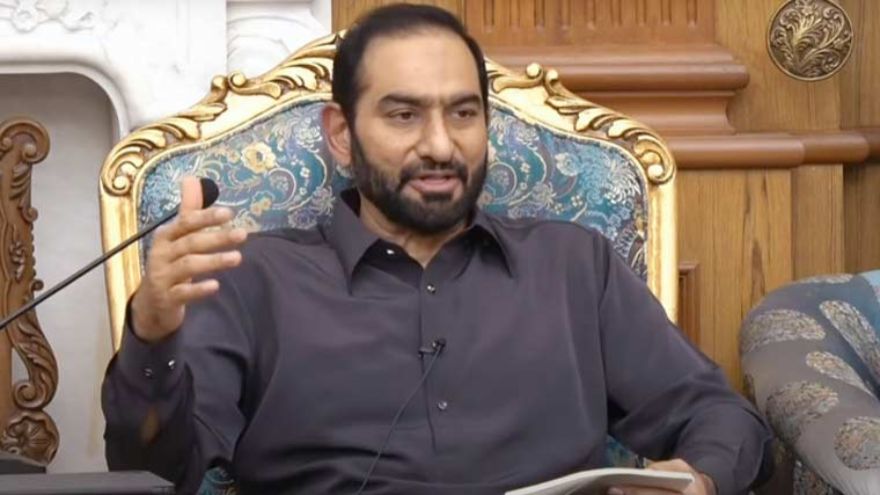
ISLAMABAD (Dunya News) – Punjab Group Chairman Mian Amer Mahmood has said that even after 78 years of independence, Pakistan’s system of only four provinces cannot sustain its growing problems.
Speaking at a meeting of the Pakistan Association of Private Medical and Dental Institutions, he emphasised that creating new provinces is the only way to ensure good governance and fair resource distribution.
At the event, Mian Amer Mahmood questioned why governance issues remain unresolved while noting that despite different political parties coming into power, no government had delivered lasting improvement. Economic decline, currency devaluation, mounting debt, and fragile law and order were repeatedly highlighted.
GOVERNANCE AND PEOPLE
He said it is unrealistic to believe that no capable leaders emerged in 80 years. Many entered politics with good intentions, yet structural flaws prevented real progress. He added that political leadership carries immense responsibility, as its policies determine the future of the nation and its next generations.
Quoting political science frameworks, Mian Amer Mahmood underlined seven key purposes of governments: public welfare, law and order, rule of law, social welfare, justice, economic progress, and state security. He argued that large federal governments historically created provinces and smaller administrative units to better serve citizens. Later, local governments were established to handle daily needs such as roads, clean water, health services, and sanitation.
In Pakistan, he lamented, local governments are either never formed or dissolved within a few years, leaving citizens dependent on provincial and federal authorities. Punjab alone now has a population of 130 million, while other provinces also continue to expand without proportionate administrative structures.
GLOBAL COMPARISONS
Presenting international examples, Mehmood said China has 31 provinces, India has 37 states and 9 union territories, the United States has 50 states, and Indonesia has 34 provinces for its 275 million people. In contrast, Pakistan, with over 240 million people, still has only four provinces.
He pointed out that Pakistan’s imbalance is stark: Punjab holds 51 percent of the population, while Balochistan covers vast land with limited access to services. Using natural gas as an example, he said Balochistan’s resources are extracted but not adequately supplied to its own residents due to distance and infrastructure challenges.
According to him, population growth since independence has worsened the imbalance. In 1957, Pakistan’s population was 33 million. By 2023, it exceeded 240 million, with Punjab alone rising from 20 million to 130 million. He noted that urban development is restricted to provincial capitals, leaving most other cities without proper universities, hospitals, or infrastructure.
System can't run smoothly without creating new provinces: Mian Amer Mahmood
He criticised the concentration of facilities in Lahore, Karachi, Quetta, and Peshawar, which has led to overcrowding, rising slums, and in Lahore’s case, extreme pollution levels where air purifiers are now common in homes.
Mian Amer Mahmood concluded that Pakistan’s system had become too outdated to cope with present realities. With provinces too large and unevenly developed, creating new provinces was necessary to ensure better governance and equal opportunities across the country.