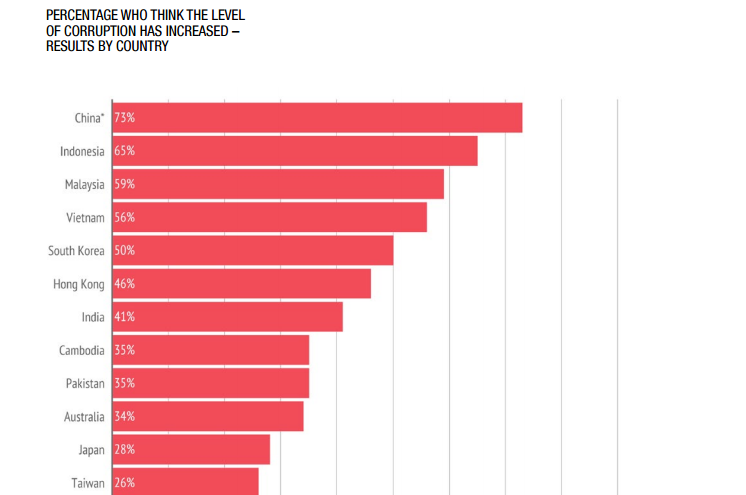
Summary People in Pakistan were particularly likely to think that the police were highly corrupt.
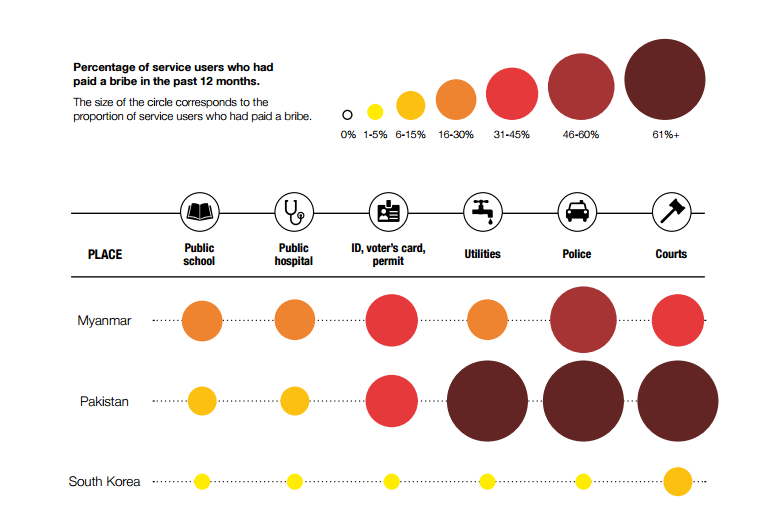
ISLAMABAD (Web Desk) - Transparency International, Berlin’s Global Corruption Barometer survey for Asia Pacific countries for 2016 has shown that around seven in 10 people who came into contact with either the police or the courts had to pay a bribe (75 per cent and 68 per cent respectively).
A regional report from the Global Corruption Barometer was issued on the results in the Asia Pacific region derived from interviews with nearly 22,000 people living in 16 countries, regions or territories.
According to the report, citizens in Pakistan felt least empowered with only a third agreeing that people can make a difference (33 per cent). This was substantially lower than in any other country that was surveyed.
Service users who paid a bribe by institutions in Pakistan include 75% to police, 68% to courts, 11% to public clinic or hospitals and 9% to public schools.
People in Thailand and Pakistan were particularly likely to think that the police were highly corrupt, with over three quarters saying most or all police officers in their country were corrupt (78 per cent and 76 per cent).
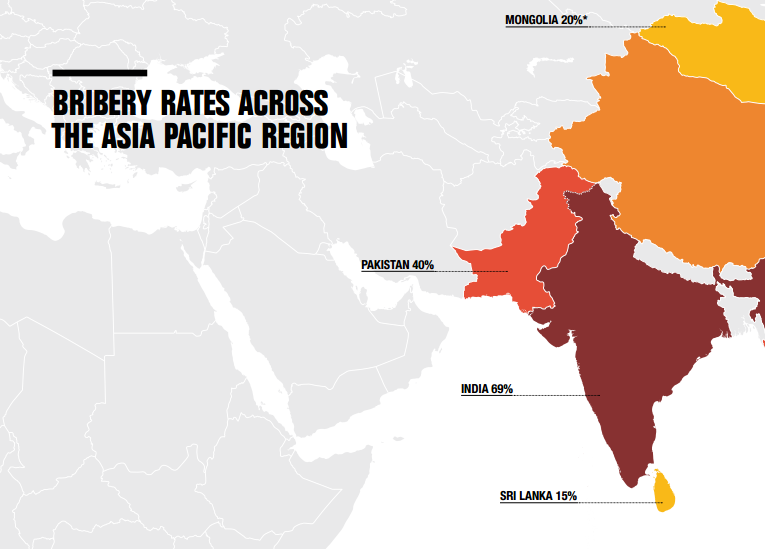
Bribery rates were highest in India and Vietnam, where nearly two thirds of respondents said they had to sweeten the deal to access basic services like public education and healthcare.
However, 40 percent bribery rate was recorded in Pakistan.
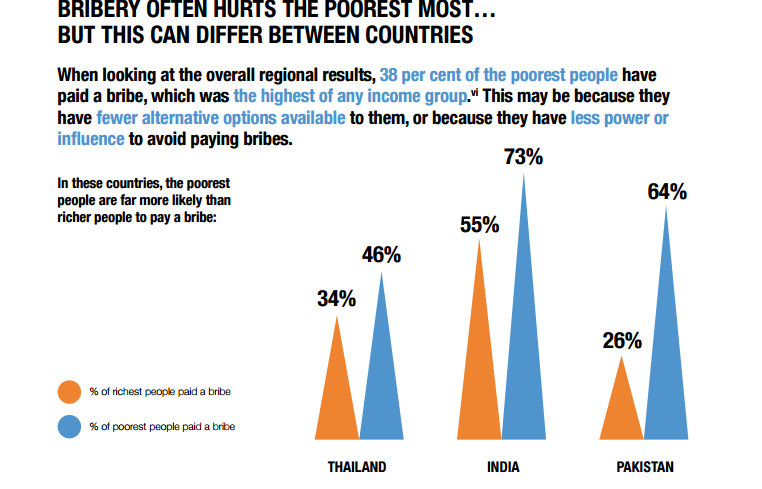
The poor are hit hardest by corruption with 38 percent of respondents saying they had to pay a bribe, the highest in any income category.
Yet while poorer people were more likely to be targeted in countries like Thailand, India and Pakistan, the reverse trend was found in places like Vietnam, Myanmar and Cambodia.
Governments must do more to deliver on their anti-corruption commitments," Jose Ugaz, the chair of Transparency International, said in a press release.
"Bribery is not a small crime, it takes food off the table, it prevents education, it impedes proper healthcare and ultimately it can kill."
It was also revealed that more than one in four, or over 900 million people, paid a bribe when using a public service, in the 16 places surveyed.