Summary Prime Minister Nawaz Sharif chaired a high-level meeting in Islamabad.
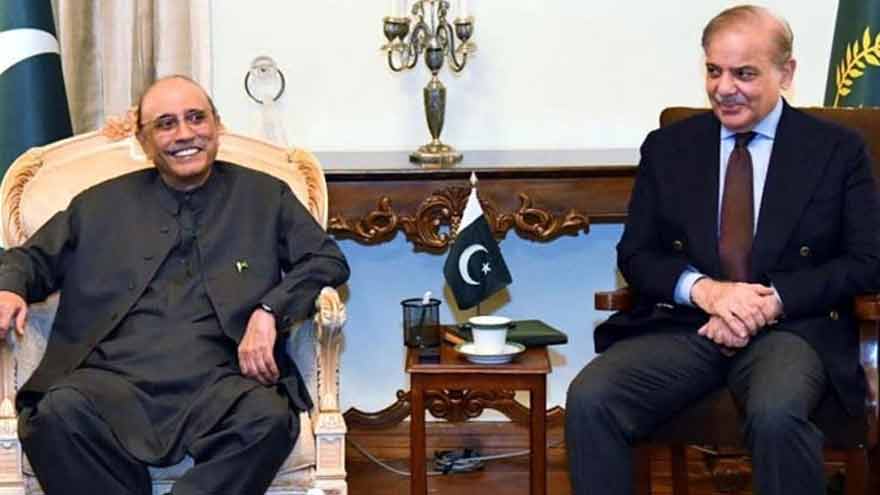
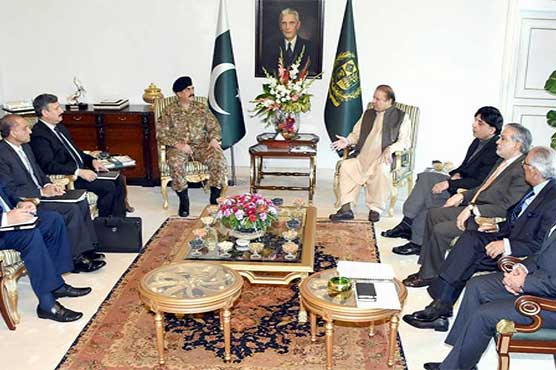
ISLAMABAD (Web Desk) - A meeting was chaired by the Prime Minister at PM House earlier today (Tuesday) to discuss issues pertaining to national and internal security.
The meeting was attended by Chief of Army Staff (COAS) General Raheel Sharif, Minister for Interior Chaudhry Nisar Ali Khan, Minister for Finance Ishaq Dar, Special Adviser to PM on Foreign Affairs Tariq Fatemi, National Security Advisor Sartaj Aziz, DG ISI, Foreign Secretary and other senior officials of the government.
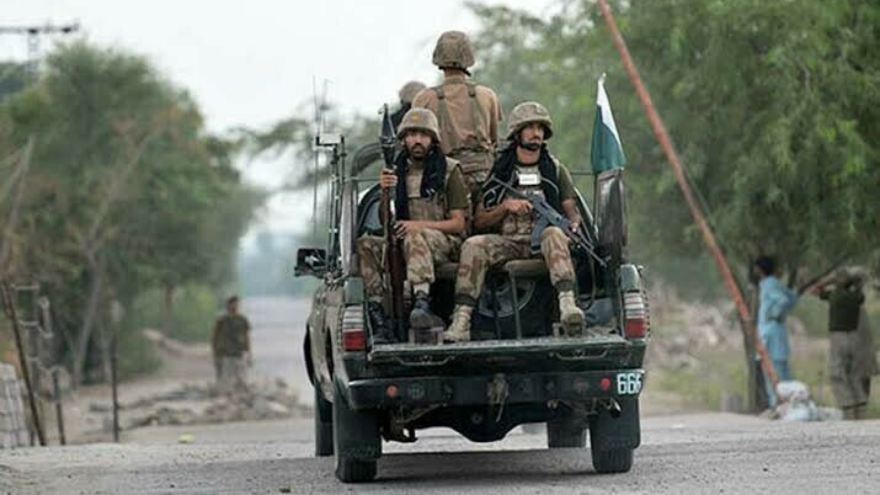
Participants of the meeting strongly condemned yesterday’s cowardly act of terrorism in Shabqadar in which 17 civilians and Law Enforcement Agency personnel lost their lives.
At least 17 people were killed and more than 30 injured when a suicide bomber, whom police said was aged around 20 and had up to six kilograms (13 pounds) of explosives strapped to his chest, attacked a local court in Shabqadar as lawyers and litigants were arriving at a court complex during the morning rush hour.
The meeting today agreed that elimination of terrorism from our soil is a national resolve and paid tributes to the personnel of law enforcement and security agencies who embraced martyrdom while fighting this menace of terrorism.
PM, COAS TO LEAVE FOR SAUDI ARABIA
The meeting took place a day prior to Prime Minister of Pakistan Nawaz Sharif and Chief of Army Staff (COAS) General Raheel Shareef’s visit to Kingdom of Saudia Arabia (KSA) where they will witness the ongoing military exercise “North Thunder” and its closing ceremony.
Prime minister’s visit will be of three days from March 9-11, whereas COAS will be there for two days.
“Troops from twenty one countries, including Pakistan, are participating in the exercise, in the northern region of Saudi Arabia. The main goal of the exercise is to improve training in responding to the threat posed by terrorist groups.” The military exercise is conducted from the platform of 34-nations military alliance formed by KSA.
Some high level meetings are expected on the sidelines of the trip as a large number of other Heads of State and Government officials have also been invited to witness the military exercise.
This will be the second visit together of both the Army Chief and Prime Minister to KSA in less than two months. Earlier they both visited Saudi Arabia and Iran in order to diffuse the tensions between two countries that arose after Saudi Arabia executed a Shiite cleric which prompted a strong response from Iran that eventually led to suspension of diplomatic ties between two states. Pakistan tried to remain neutral by not taking sides and insisted on playing the role of a mediator.
The year 2015 saw an unprecedented turn in Pakistan’s relations with Saudi Arabia when the former refused to join Saudi military forces against Houthi rebels in Yemen and took a clear stance that it will not deploy its forces outside country’s borders except for United Nations Peace Keeping missions. The political analysts around the globe speculated that Pakistan’s refusal could cause irreparable damage to Saudi-Pak historic and friendliest relations.
However Pakistan had firmly maintained that “the attack on Saudi Arabia will be considered an attack on Pakistan”, and vowed to protect the kingdom in face of any threat. The Government of Pakistan has affirmed that it will always stand shoulder to shoulder with our Saudi brethren against any threat to territorial integrity and sovereignty of Saudi Arabia.
Pakistan’s relations with Arab states, especially Saudi Arabia go way back and people of Pakistan hold special respect for the kingdom given their religious attachment. Both countries have reiterated over time that threat to one’s sovereignty would mean threat to the other’. Pakistan’s relations with Saudi Arabia go beyond the strategic partnership. Saudi Arabia is a top destination for unemployed Pakistanis; and Pakistan’s southern region has been a favorite of Arab dignitaries for hunting including the forbidden Houbara Bustards.
The Islamic Military Alliance, of 34 Muslim nations envisioned and put together by Saudi Arabia, was established with the mission to fight terrorism in Iraq, Syria, Libya, Egypt and Afghanistan. The headquarters of the 34-nation military bloc will be based in Riyadh. Theannouncement was met with surprise from Pakistan and many other countries. The initial reaction from Pakistani officials confirmed that Pakistan’s consent and consultation was not taken into account while forming this coalition. Later, Pakistani government welcomed the initiative and confirmed its participation in the “anti-terror’” alliance. Many viewed it as a step to mend the earlier rift caused by Pakistan’s snub to fight Saudi’s proxy war in Yemen.
Although Pakistan has expressed enthusiasm to be a part Saudi-led coalition, it remains uncertain whether Pakistan’s role will be limited only to sharing military expertise or sending troops on the ground, mainly to fight ISIS in Syria, which would mean Pakistan physically joining the Middle-East conflict.