Summary Foreign Office says both the countries should resolve the issue with the help of talks
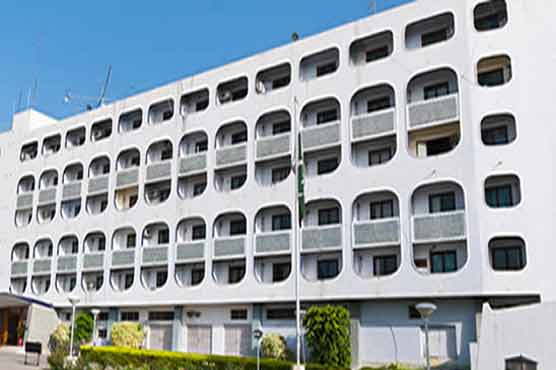
ISLAMABAD: (Dunya News) – Pakistan’s Foreign Office (FO) has on Monday expressed concern over the tensions between Saudi Arabia and Iran. FO spokesperson said that both the countries should resolve their issues through talks, reported Dunya News.
Terming the attack on Saudi embassy in Tehran as unfortunate, FO spokesperson said that the security of embassies and diplomats is state’s responsibility. He added that ‘extremists’ may benefit from the differences between the Muslim countries. He said that both the countries should talk to resolve their matters in the larger interest of the Muslim Ummah.
FO spokesperson said that the challenge posed by terrorism demands from Saudi Arabia and Iran to work together.
According to FO, Pakistan has strongly condemned the terrorist attack at Pathankot airbase and expressed grief over the attack. He said that Pakistan is in contact with the Indian government over the tragedy. He said that Pakistan is working on the information provided by the Indian government regarding the attack. He added that both the countries should be determined to continue with the dialogue process.
Also read: Arab League to hold emergency talks as Iran-Saudi crisis deepens
Angry exchanges following Saudi Arabia s execution Saturday of prominent Shia cleric and activist Sheikh Nimr al-Nimr erupted into a full-blown diplomatic crisis as Riyadh and then Bahrain and Sudan severed their relations with Tehran, the main Shia power.
The United States and other Western nations urged calm, amid fears the dispute could derail efforts to resolve conflicts across the Middle East, from Syria to Yemen.
It has also raised concerns of an increase in sectarian violence, including in Iraq where two mosques were blown up overnight.
Saudi Arabia cut the ties with Iran late on Sunday, giving diplomats 48 hours to leave the country, after protesters set fire to its embassy in Tehran and a consulate in second city Mashhad.
Bahrain and Sudan followed suit on Monday, as Moscow offered to act as an intermediary between Riyadh and Tehran.
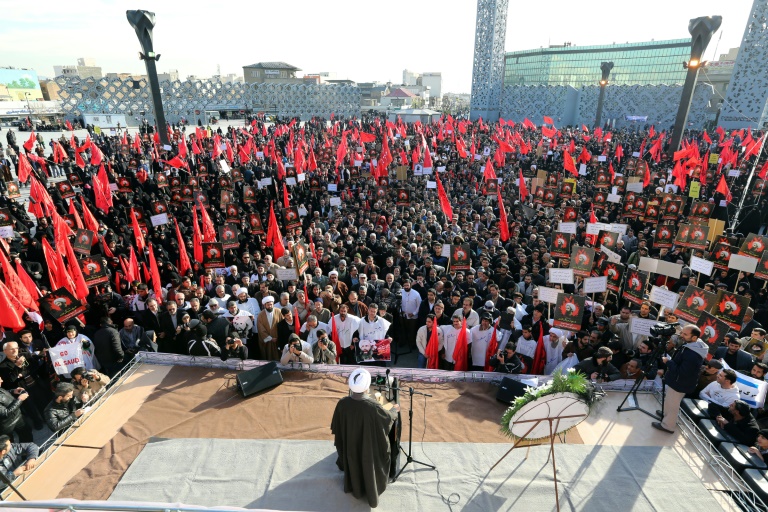
Iranians hold a rally at Imam Hossein Square in Tehran on January 4, as they demonstrate against the execution of prominent cleric Nimr al-Nimr by Saudi authorities
The United Arab Emirates also downgraded its ties, recalling its envoy from Tehran and reducing the number of its diplomats in the country.
Sunni Arab nations accused Tehran of repeatedly meddling in their affairs, with Saudi Foreign Minister Adel al-Jubeir saying "Iran s history is full of negative interference and hostility in Arab issues".
Bahrain accused Iran of "increasing flagrant and dangerous meddling" in Gulf and Arab states, while the UAE said Iranian interference had reached "unprecedented levels".
Some 80 Saudis, including diplomats and their families, had already left Iran and arrived in Dubai on Monday, diplomatic sources said.
Iranian officials denounced the Saudi move as a tactic that would inflame regional tensions.
- Fears over Syria, Yemen -
"Saudi Arabia sees not only its interests but also its existence in pursuing crises and confrontations and (it) attempts to resolve its internal problems by exporting them to the outside," foreign ministry spokesman Hossein Jaber Ansari said.
Iran and Saudi Arabia are on opposing ends of a range of crucial issues in the Middle East, including the war in Syria -- where Tehran backs President Bashar al-Assad s regime and Riyadh supports rebel forces -- and Yemen where a Saudi-led coalition is battling Shiite insurgents.
The spike in tensions comes after Iran last year secured a historic nuclear deal with world powers led by the United States, sparking major concern in Riyadh, a longtime US ally.
Washington raised concern over the growing crisis, with State Department spokesman John Kirby calling for "leaders across the region to take affirmative steps to calm tensions".
In Moscow, a foreign ministry source told AFP Russia "is ready to serve as an intermediary between Riyadh and Tehran" in the dispute.
The Cairo-based Arab League said it would hold an emergency meeting at Riyadh s request on Sunday to discuss the attacks on Saudi diplomatic premises in Iran.
British Prime Minister David Cameron said the tensions were "hugely concerning", Germany expressed its "dismay" and called for the restoration of diplomatic ties, and France urged a "de-escalation of tensions".
Oil prices rose on fears of Middle East instability, with US benchmark West Texas Intermediate climbing 30 cents to $37.34 a barrel.
Gulf stocks tumbled, with six of the region s seven exchanges down and the Saudi Tadaul All-Shares Index falling by 2.36 percent.
Iran s President Hassan Rouhani, a moderate, on Sunday criticised those who attacked the diplomatic buildings, calling them radicals, and 50 suspects were arrested.
But the country s supreme leader Ayatollah Ali Khamenei warned Riyadh its rulers would face "quick consequences" for executing Nimr.
Some 3,000 demonstrators gathered for a new rally in Tehran on Monday, chanting anti-Saudi slogans and burning US and Israeli flags.
- Mosque blasts in Iraq -
As tensions rose, Saudi football clubs in the Asian Champions League appealed for fixtures in Iran in February to be played on neutral ground.
In Iraq, top cleric Grand Ayatollah Ali al-Sistani called Nimr s execution "an unjust act of aggression", and on Monday blasts rocked two Sunni mosques in the centre of the country, wounding at least three people.
A man living at one of the mosques in the town of Hilla was shot dead by unidentified gunmen and a Sunni muezzin -- who recites the Muslim call to prayer -- was shot dead near his home in the city of Iskandariyah, security sources said.
Prime Minister Haider al-Abadi said security forces were tracking down the perpetrators "who targeted mosques to sow sedition and undermine national unity".
The 56-year-old Nimr was a force behind 2011 anti-government protests in eastern Saudi Arabia, where Shia citizens have long complained of marginalisation.
He was among 47 men executed on Saturday, including other Shia activists and Sunni militants the Saudi interior ministry said were involved in Al-Qaeda attacks that killed dozens in 2003 and 2004.
Nimr s brother Mohammed on Monday condemned retaliatory attacks on the kingdom s diplomatic missions in Iran.
"We appreciate your love towards the martyr #Sheikh_AlNimr who lives in our hearts but we refuse attacks on #Saudi ambassies in #Iran or others," Mohammed al-Nimr wrote in English on Twitter.
The family also called for Nimr s body to be handed over for burial, after authorities said it had already been buried.
Executions have soared in Saudi Arabia since King Salman ascended the throne a year ago with 153 people put to death in 2015, nearly twice as many as in 2014, for crimes ranging from murder to drug trafficking, armed robbery, rape and apostasy.