Updated on
Summary
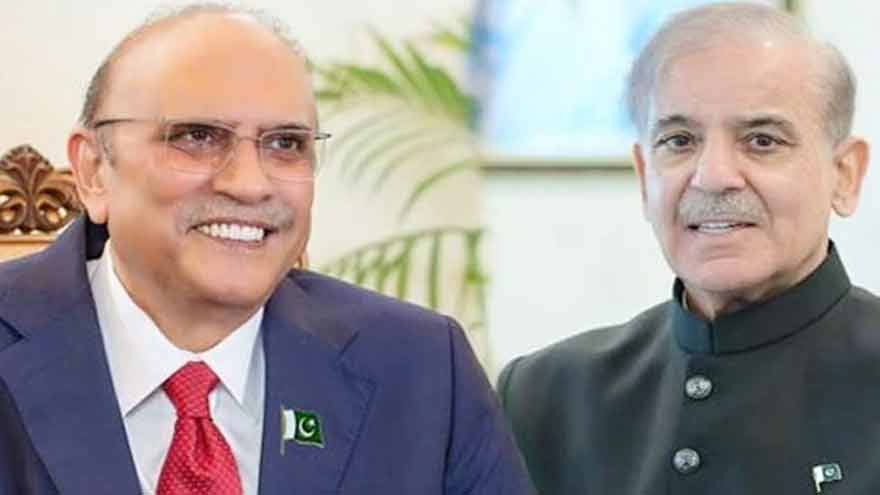
The National Command Authority (NCA) on Wednesday took a serious view of recent Indian statements to conduct conventional military strikes under a nuclear umbrella, saying these reflected a hegemonic mindset. Vowing not to compromise on its security interests, the NCA said such irresponsible statements reflected a hegemonic mindset, oblivious of dangerous implications of adventurism in a nuclearized context. The National Command Authority (NCA) that met in Islamabad to review matters of strategic importance to Pakistan was the first, chaired by Prime Minister Yousaf Raza Gilani since he assumed command of the authority. President Asif Ali Zardari divested himself of the powers of Chairman National Command Authority on Dec 27 and transferred the powers of Chairman to the Prime Minister, through re-promulgation and amendment of the National Command Authority Ordinance, 2009. The NCA noted the India-specific exemption made by the Nuclear Suppliers Group (NSG) and subsequent nuclear fuel supply agreements with several countries saying it would enable India to produce substantial quantities of fissile material for nuclear weapons by freeing up its domestic resources, a statement issued after the meeting said. While continuing to act with responsibility and avoiding an arms race, Pakistan will not compromise on its security interests, the imperative of maintaining a credible minimum deterrence, the NCA reiterated. The authority expressed satisfaction on the safety and security of Pakistans strategic assets and the effectiveness of the countrys strategic deterrence. The NCA reaffirmed Pakistans policy of restraint and responsibility and its resolve to continue efforts to promote peace and stability in South Asia. It underscored the need for prevention of conflict and avoidance of nuclear and conventional arms race in the region. The NCA took note of the developments detrimental to the objectives of strategic stability in the region. It observed that instead of responding positively to Pakistans proposal for a Strategic Restraint Regime in South Asia, India continues to pursue an ambitious militarization programme and offensive military doctrines. Massive inductions of advanced weapon systems, including installation of ABMs, build-up of nuclear arsenal and delivery systems through ongoing and new programmes, assisted by some external quarters, offensive doctrines like Cold Start and similar accumulations in the conventional realm, tend to destabilize the regional balance, the statement released from the PM House said. This relentless pursuit of military preponderance will have severe consequences for peace and security in South Asia as well as for the Indian Ocean region, the statement noted and pointed that Pakistan cannot be oblivious to these developments. The meeting reviewed plans for civil nuclear power generation under IAEA safeguards as part of national energy security strategy to ensure sustained economic growth. It welcomed the renewed international interest in nuclear power generation to meet the challenge of climate change. The NCA stated that Pakistan, having advanced fuel cycle capability, was in a position to provide nuclear fuel cycle services under IAEA safeguards, and to participate in any non-discriminatory nuclear fuel supply assurance mechanism. The meeting expressed satisfaction at the steps taken by Pakistan at the national level for nuclear safety and security, which continue to be important considerations in the context of national nuclear power development plans.The meeting reaffirmed that, as a nuclear weapon state, Pakistan was committed to work as an equal partner in international efforts for general and complete nuclear disarmament and non-proliferation. In this regard, it underscored the need for non-discriminatory policies and accommodation of the reality of Pakistans nuclear weapon status for promoting global non-proliferation goals. It emphasized that promotion of nuclear non-proliferation and disarmament objectives in South Asia were linked with regional security dynamics and the need to address existing asymmetries and resolution of outstanding disputes. The NCA stressed that, as the sole disarmament negotiating forum, the Conference on Disarmament (CD) in Geneva should play its due role in global nuclear disarmament. As far as the consideration of a Fissile Material Treaty (FMT) at the CD is concerned, Pakistans position will be determined by its national security interests and the objectives of strategic stability in South Asia. Selective and discriminatory measures that perpetuate regional instability, in any form and manner, derogate from the objectives of nuclear disarmament and non-proliferation and, therefore, cannot be accepted or endorsed. Pakistan will not support any approach or measure that is prejudicial to its legitimate national security interests.