Summary Experts say the findings could have far-reaching implications for disease research
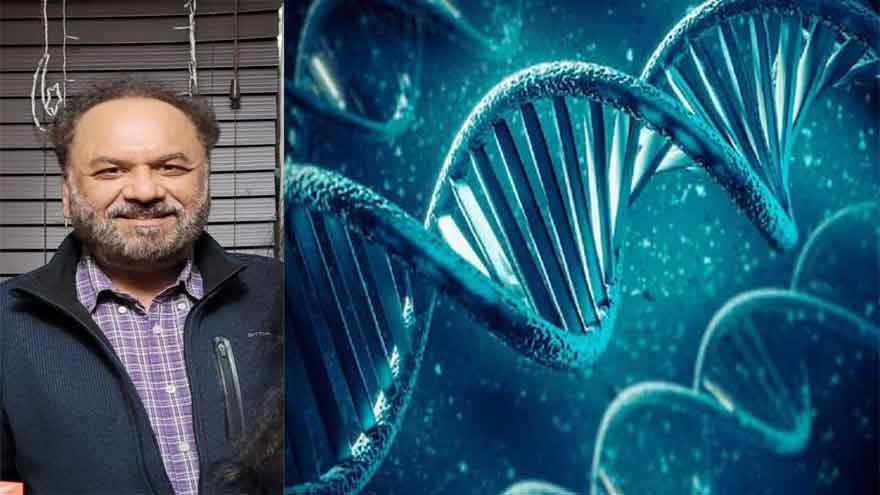
LAHORE: A Pakistani researcher working at Algoma University in Canada has contributed to a major international study that uncovers new layers of complexity in the human genetic code and protein formation.
The study was led by Dr Arshad Rafiq, a faculty member of Pakistani origin at Algoma University, and co-authored by student researcher Maahil Arshad, also of Pakistani background, along with international colleagues Matthew Uchmanowicz and Vanshika Rana. Their paper, titled Mapping the Inter- and Intra-genic Codon Usage Landscape in Homo sapiens, was recently published on the global preprint platform bioRxiv.
According to Dr Rafiq, the research focuses on “codon usage bias” - subtle patterns in the way genetic instructions are written that were previously underexplored in humans. He said the findings reveal that such biases regulate how proteins are built, folded and preserved, and could reshape scientific understanding of genetic information.
The study further notes that codon usage bias is significantly stronger in structured regions of proteins than in flexible ones, and that genes with highly biased codon usage often resist so-called “silent mutations”, indicating deep evolutionary constraints.
Scientists say the findings could have far-reaching implications for disease research and drug development.
Funded by Algoma University, the project lays the groundwork for future advances in functional genomics and the interpretation of genetic mutations increasingly tied to human health.