Summary Spy thriller has been pulled from British and some Indian theatres after controversy.
MUMBAI (Web Desk) - Bollywood s big cinema release this week, the spy thriller Madras Cafe, has caused controversy in India with Tamil groups demanding a ban. Geeta Pandey in Delhi meets the film s director and lead actors to find out what the row is all about.
Watching the official trailer of the film, it is obvious that the conflict in Sri Lanka and the assassination of former Indian Prime Minister Rajiv Gandhi is its central theme.
The film is set in the late 1980s and early 1990s and includes the time when Mr Gandhi was assassinated by Sri Lanka s Tamil Tiger rebels in 1991 at an election rally in the southern state of Tamil Nadu.
Director Shoojit Sircar describes the film, which will be released across India and many parts of the world on 23 August, as "an espionage thriller", but concedes that it draws from real-life events.
"The film is a work of fiction, but it is based on research into real events, it has a resemblance to actual political events, dealing with civil war and the ideology of a rebel group.
"The film revolves around important events that changed the political history of India," he says.
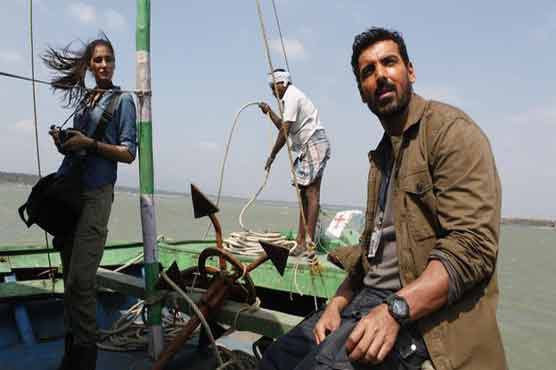
John Abraham, the lead actor, plays intelligence agent Major Vikram Singh who is sent to Jaffna (in northern Sri Lanka) against the backdrop of the civil war and becomes entangled in rebel and military politics.
In the process he discovers a plot to assassinate "a former Indian prime minister".
Mr Sircar agrees that the rebel leader in the film bears an uncanny resemblance to Tamil Tiger rebel group leader Vellupillai Prabhakaran, while the actor playing the former prime minister looks like Rajiv Gandhi. But he says that "such resemblances are coincidental".
But even before its release, the film has run into controversy. Tamil groups and politicians in the southern state of Tamil Nadu denounced it as "anti-Tamil" and vowed to stop its release in the state.
The film is based on the civil war in Sri Lanka in the late 1980s and early 1990s.
A special screening, arranged for some of the protesters earlier this week, failed to pacify them. Many insist that it depicts the Tamil Tigers and Prabhakaran in a bad light.
"The aim of the movie is to portray Prabhakaran as a villain. We cannot accept the movie in any form," Seeman, leader of Tamil group Naam Tamizhar Katchi, said.
"The heart of the film is anti-Tamil," he added, urging cinema halls in the state not to screen the film.
A petition has been filed in the Madras high court which also seeks a ban.
The petitioner, lawyer B Stalin, alleges that the film portrays Tamils as "terrorists" and that its screening might lead to law and order problems.
Abraham, who has also produced the film, says he is "very disappointed and disturbed" by the allegations.
"I believe it to be a very pro-Tamil film and it was not made to hurt anyone s sentiments," the actor said. "We did not make the film to create a controversy."
Madras Cafe, which opened on Friday, features John Abraham as an Indian secret agent sent to Sri Lanka during the island s decades-long conflict between the government and separatist Tamil rebels.
But the film has failed to reach a number of cinema halls after ethnic Tamil populations in India and in Britain complained that they were unfairly portrayed.
"Our UK exhibitors, Cineworld, decided to hold back the film after protesters gathered outside their UK offices," said Rudrarup Datta, marketing head at the film s Indian co-producer and distributor Viacom18 Motion Pictures.
"Exhibitors do not want to take a risk and withdrawing screenings of the film is their prerogative," Datta said.
No British cinemas are currently showing the film although they were still hopeful of a release at a later date, he added.
A full release has gone ahead in the United States, Canada and the United Arab Emirates.