Summary Harappa remains a remarkable chapter in human history, symbolizing innovation, organization, and cultural development.
(Web Desk) - The ancient civilization of the Indus Valley, commonly known as the Harappa Civilization, is regarded as one of the earliest, most organized, and advanced urban societies of the subcontinent.
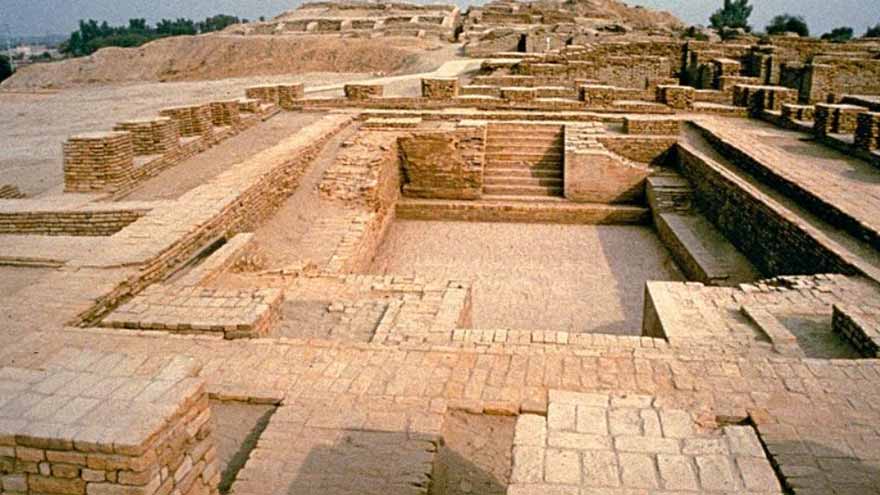
Flourishing between 2600 BCE and 1900 BCE, the Indus Valley Civilization stood alongside other early civilizations such as Mesopotamia and Ancient Egypt. What set Harappa apart was its remarkable urban planning. The cities featured straight streets, well-organized drainage systems, durable brick structures, and efficient waste management, reflecting a highly developed administrative system.
Harappan society also demonstrated significant progress in crafts and trade. Artifacts such as seals, pottery, metalwork, and standardized weights and measures indicate a sophisticated economy with strong trade links extending to distant regions, particularly Mesopotamia. The civilization appears to have been relatively peaceful, as there is little archaeological evidence of large-scale warfare or destruction.
Archaeologists divide the Harappan civilization into three major phases. The early phase (3300–2600 BCE) saw the emergence of small villages that gradually evolved into organized towns, laying the foundation for urban growth. The mature phase (2600–1900 BCE) marked the peak of the civilization, with major cities like Mohenjo-daro and Harappa reaching their height in terms of planning, infrastructure, and economic activity. The late phase (1900–1300 BCE) witnessed decline, as cities began to depopulate and people moved toward smaller settlements.
The influence of Harappa can still be seen in South Asia today. Its legacy is evident in urban planning concepts, agricultural practices such as the cultivation of wheat, barley, cotton, and sesame, and traditional systems of trade and measurement. Although the Harappan script remains undeciphered, its cultural and symbolic elements may have influenced later traditions in the region.
The decline of the civilization is believed to have been gradual rather than sudden. Experts point to climate change, shifting river patterns, particularly the drying of the Ghaggar-Hakra River, reduced rainfall, and economic downturn as key factors. Declining trade and migration to more fertile areas further contributed to the weakening of urban centers.
Harappa remains a remarkable chapter in human history, symbolizing innovation, organization, and cultural development. Its study not only sheds light on the past but also offers valuable lessons about sustainability, urban planning, and the factors that influence the rise and fall of civilizations.