Summary In 2011, two years before the attacks, Dzhokhar took part in a "mini-UN" workshop
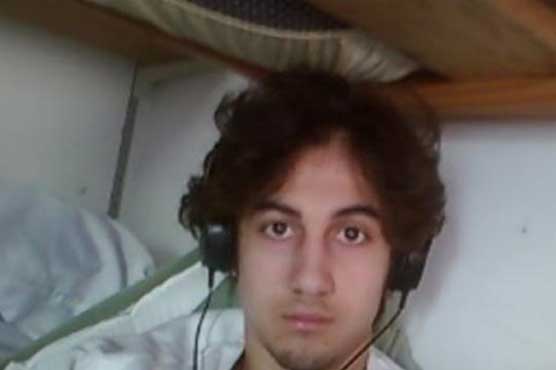
BOSTON (AFP) - Boston bomber Dzhokhar Tsarnaev was a "lovely" child who worked diligently in school and liked everyone, former teachers told his death penalty trial on Wednesday.
Two of his friends fought back tears as they described him as loyal and funny in the US federal court where a jury must decide whether to sentence the 21-year-old of Chechen descent to death or life imprisonment.
Wednesday s direct testimony about Dzhokhar marked a changing tack for the defense, which previously portrayed his elder brother Tamerlan as the real mastermind of the attacks.
The brothers bombed the Boston Marathon finish line, killing three people and wounding 264 others on April 15, 2013.
Tamerlan, 26, was shot dead by police four days after the attacks, leaving Dzhokhar, now 21, to stand trial and face conviction alone.
"He cared a lot about his studies," said Catheryn Charner-Laird, his third grade teacher when Dzhokhar arrived in the United States aged eight.
"He was incredibly hard working, always wanted to do the right thing," she said. Smiling affectionately at the defendant, who sat emotionless and did not return her gaze, Charner-Laird said he "never" had to be punished.
His fifth grade teacher Tracy Gordon summed him up as "super kind, really smart, really lovely. He was an outstanding student and beyond his academics, it was a person you enjoyed being around."
Dzhokhar made friends easily and was "very respectful" to all, children and adults alike, she said. "He would befriend anybody."
Rebecca Norris, who taught him math and algebra said he was "really bright" and "really good at math, all teachers loved him."
- A good friend -
===================
But in ninth grade, Dzhokhar came to school wearing the wrong color pants and was sent home to change under school regulations. His mother Zubeidat was furious and enrolled him elsewhere, Norris said.
In 2011, two years before the attacks, Dzhokhar took part in a "mini-UN" workshop, reserved for the most gifted students, another teacher said.
Tiarrah Dottin, one of his friends at the University of Massachusetts, Dartmouth described a student who was "loyal, fun, laid back." He never spoke of politics and she did not know he was Muslim, she said.
Another friend, Alexa Guevera, said he was "very kind" and "very accepting" and a person who did not take himself seriously, but who liked pizza, rap and fast cars and spoke little about his family.
"I really miss the person that I knew. He was a good friend, he was there for me," she sobbed.
Earlier on Wednesday, the trial heard how Tamerlan traveled to Dagestan in southern Russia in January 2012 to "get involved in jihad."
He asked for connections to radicals, distant cousin Magomed Kartashov told the FBI in Dagestan, excerpts of which were read out in court.
Tamerlan said he had come "with the intention to fight jihad in the forest," his cousin told the US investigators in June 2013, explaining that he had little understanding of the realities in Dagestan.
He said his cousin had become radical by listening to online sermons from American-Yemeni cleric Anwar al-Awlaki, who was killed in a drone strike in Yemen in 2011.
The defense also told the court that the Russian security services tipped off the FBI in March 2011 and the CIA in September 2011 about Tamerlan and his mother s radicalism.
But a Boston investigation concluded there was no terrorist activity.