Summary The industrial sector witnessed negative growth, and decreased to -1.5 percent.
KARACHI (Dunya News) – The delay in reaching an agreement with the International Monetary Fund (IMF) for a $6 billion bailout package has caused a major blow to the economy of the country.
Further devaluation of rupee against the US dollar has resulted in rising inflation, even in the prices of essential commodities.
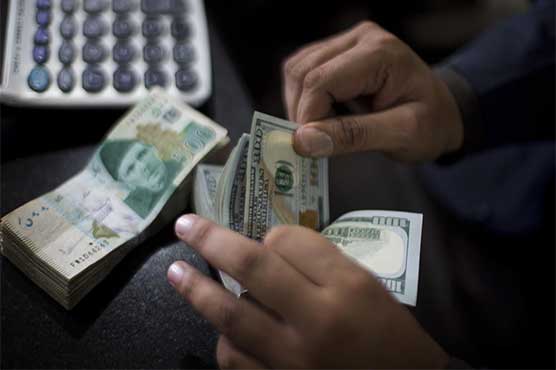
In November, 2018, US dollar fluctuated around 138 rupees in the open market. However, now the Pakistani currency suddenly weakened over one-rupee to Rs143.7 to the US dollar in the open market on Monday as Pakistan has agreed to a stringent International Monetary Fund (IMF) bailout programme.
There is speculation that the rupee would further depreciate against the US dollar in the inter-bank market.
In November, 2018, the index at Pakistan Stock Exchange (PSX) was 40,496 points, while it has reduced to 35,000 points in the month of May, 2019.
The industrial sector witnessed negative growth, and decreased to -1.5 percent.
Consumer Price Index CPI in Pakistan increased to 244.03 Index Points in April from 240.99 Index Points in March of 2019. Consumer Price Index CPI in Pakistan averaged 139.59 Index Points from 2001 until 2019, reaching an all time high of 244.03 Index Points in April of 2019 and a record low of 62.82 Index Points in July of 2001.
The inflation rate in Pakistan eased to 8.82 percent year-on-year in April 2019 from 9.41 percent in the previous month, which was the highest level since November 2013.
Prices rose at a softer pace for housing & utilities (10.06 percent vs 11.55 percent in March), clothing & footwear (5.27 percent vs 7.21 percent), furnishing & household equipment (8.32 percent vs 9.51 percent) and education (5.57 percent vs 6.12 percent). Meanwhile, inflation accelerated for food & non-alcoholic beverages (8.51 percent vs 8.22 percent) and transport (14.50 percent vs 13.01 percent).
On a monthly basis, consumer prices advanced 1.26 percent in April, due to rising petrol and diesel prices as well as an increase in the cost of food items such as carrots, oranges, cabbage and chicken.