Summary Iron ore prices climbed nearly 10 percent
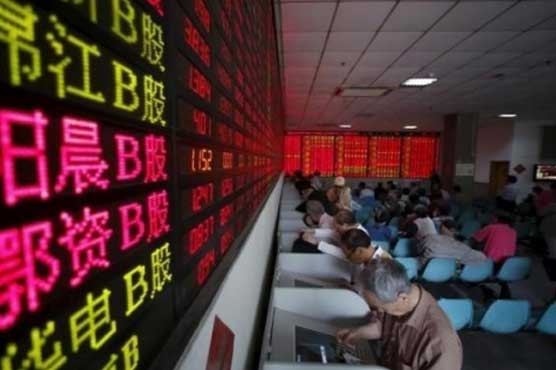
SHANGHAI (AFP) - Chinese stocks surged for a second day on Friday as a government rescue plan offered a respite from a month-long rout, but analysts warned of further uncertainty and volatility ahead.
The rally also provided some support to regional markets and commodities, which had earlier this week been hammered by fears about a spillover effect beyond the mainland.
The benchmark Shanghai Composite Index shot up 4.54 percent, or 168.47 points, to 3,877.80 on turnover of 680.4 billion yuan ($111.3 billion), taking its two-day rise over 10 percent.
In a roller-coaster week, the Shanghai market gained 5.18 percent overall, after the government announced additional policies to avoid a market crash.
But it is still down 24.9 percent from its closing peak on June 12.
The Shenzhen Composite Index, which tracks stocks on China s second exchange, jumped 4.09 percent, or 79.91 points, on Friday to 2,035.26 on turnover of 247.3 billion yuan, still losing 3.01 percent over the week.
The government boost came after the Shanghai index plunged by almost a third in less than four weeks, wiping trillions of dollars from market capitalisation, spreading contagion in regional markets, and raising fears over the potential impact to the real economy.
The tide turned after the government launched a police crackdown on short-selling and banned big shareholders -- those holding at least five percent stakes -- and company executives from selling stock for the next six months.
After the market closed on Friday, the regulator said in a statement it had asked such individuals to increase their stakes and listed companies to buy back their own shares to stabilise prices.
"Market sentiment has definitely reversed significantly and started to stabilise, so it s safe to say that the state s measures have won initial success," Phillip Securities analyst Chen Xingyu told AFP.
"However, there is still a chance for the market to see a second withdrawal (of funds) after big rises like this, but it won t be as lasting and as deep as earlier plunges," he said.
The stock market slide of recent weeks was a dramatic reversal of a 150 percent charge in the 12 months to its peak last month, fuelled by tens of millions of retail investors using borrowed funds.
Gu Luxian, who quit his banking job in March and now trades full time, remained cautious. "The sharp rises these two days are just rebounds from previous big declines. The market won t go too far up," he told AFP.
Shanghai s gains also helped boost other Asian markets. Hong Kong closed up 2.08 percent, adding to a near four percent advance in the previous session, while Sydney rose 0.38 percent and Seoul put on 0.17 percent.
Iron ore prices climbed nearly 10 percent.
On Friday, more than 1,300 companies were halted from trading on China s two exchanges, nearly half of total listings, Bloomberg News reported. Trading suspensions tend to slow market activity and defer risk until later.
Brokerages led the gains. Shanghai-listed China Merchant Securities surged 9.97 percent to 26.70 yuan while Shenzhen-listed Shanxi Securities jumped by its 10 percent daily limit to 15.47 yuan.
Railway construction companies also rose. In Shanghai, China Railway Construction gained 9.61 percent to 19.17 yuan while China Railway Erju soared by its 10 percent daily limit to 13.79 yuan.
- IMF sees little impact -
==========================
The stock market boost has included allowing insurance companies to invest more assets in stocks and a programme to buy the shares of smaller companies.
"The volatility of this market has led many investors to question where China s equity market is headed," Andy Rothman, investment strategist for Matthews Asia, said in a research report this week.
"However, given the market is driven primarily by retail investors, it is impossible to predict how their sentiment may evolve."
China s economy, the world s second largest, is already faltering. Gross domestic product expanded 7.4 percent in 2014, the slowest pace since 1990, and weakened further in the first three months of this year.
But the International Monetary Fund (IMF) said Thursday that there was no reason to lose faith in China s economy because of the bursting stock market bubble.
"There is no particular reason to have lost confidence," IMF chief economist Olivier Blanchard told a news conference in Washington.
The spillover of the market rout into the economy was "likely to be small", he added.
Auto and property sales have been affected, media reports say, though analysts expect the overall impact on consumption to be relatively small.
Industry group China Association of Automobile Manufacturers said Friday that auto sales, which fell 2.31 percent year-on-year in June, have been hurt by stock market volatility.