


Tarbela 4th and 5th extension projects to add 2820 MW to system: Minister
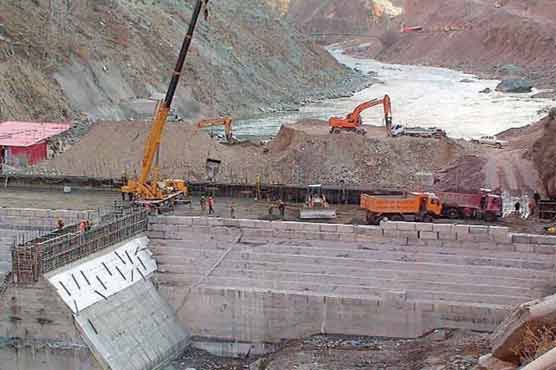
49 per cent work on Tarbela 4th generation extension project has been completed
Dunya News Report (Jibran Dost)
ISLAMABAD: Minister of State for Water and Power Chaudhry Abid Sher Ali has stated that Tarbela 4th and 5th extension power projects will add 2820 Mega Watt (MW) low cost hydel electricity to the national grid system.
Addressing the APP in Islamabad, the minister expressed that both projects in Tarbela would improve the current generation capacity of 3478 MW to 6298 MW. At the same time, 49 per cent work on Tarbela 4th generation extension project has been completed and the project would begin supplying 1410 MW to the national grid system in July 2017.
Furthermore, the 5th extension power project would also add another 1410 MW to the system, the minister added.
With regard to the 4th extension power project, the minister expressed that the project was expected to complete in 2018, but on the direct orders of Prime Minister Nawaz Sharif, the project will be operational by June 2017.
The World Bank has offered financial assistance to the total cost of the project which is $ 929 million.
On the other hand, the layout and design plan for the 5th extension power project had already been completed at a cost of $ 2.9 million. “It will complete in a 39-month period once work starts on it. The project would be commissioned in March 2020,” he added.
“By the end of December 2017, the remaining three units having capacity to generate 242 MW each would start supplying electricity to national grid,” Abid Sher Ali added.
In Pakistan, there has been an enormous increase in the demand of energy as a result of industrial development and population growth, compared to the enhancements in energy production. Therefore the supply of energy is falling behind the actual demand.
For years, the matter of balancing Pakistan’s supply against the demand for electricity has remained a largely unresolved matter. The country faces big challenges in altering its networks that are responsible for the supply of electricity. Electricity generation in Pakistan has shrunk by up to 50% in the recent years, primarily because Pakistan’s energy infrastructure is not well developed; rather, it is considered to be under- developed and poorly managed.
Pakistan needs around 15,000 to 20,000 MW electricity per day, however, currently it is able to produce only 11,500 MW per day hence there is a shortfall of about 4000 to 9000 MW per day.
Over the years, there is a greater need of energy because there is a notable increase in population. According to the economic survey of Pakistan 2010-11, the total population of Pakistan is 177.1 million against the 173.5 million in last year. Population growth rate is 2.1 % and in the list of most populous countries, Pakistan is at 6th number. At the same time, Pakistan has higher-than-average population growth rate n South Asia.
Energy crisis has, more or less, plagued all sectors of Pakistan’s machinery ranging from economy to industry, agriculture to social life, inflation to poverty and it is hampering national progress in a drastic manner. Nonetheless, menace of energy crisis can be overwhelmed by government working towards effective policies and its implementation. Simultaneously, it is also the responsibility of the people to utilize the available energy wisely to play our role for the progress of our nation.
