



Curfew lifted in India-held Kashmir but fresh clashes erupt
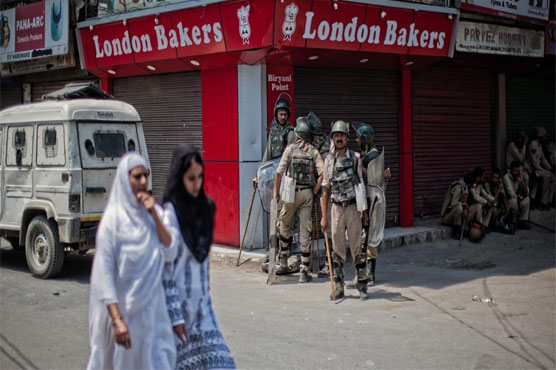
The curfew has been triggered by the killing of a popular commander Burhan Wani on July 8.
SRINAGAR, India (AFP) -- Authorities lifted a curfew in Indian-occupied Kashmir after 52 days of lockdown amid deadly violence, but street clashes broke out again Monday between protesters and security forces.
Restrictions were lifted throughout most of the tense held Kashmir Valley including the main city of Sringar "following improvement in the situation", police said in a statement late Sunday.
It was unclear whether the relaxation of restrictions would continue in the northern Himalayan region, where 86 civilians and two police officers have been killed and more than 80,000 injured since the unrest erupted last month.
Many of those injured have been hit in the eyes with pellets, causing partial or complete blindness.
Schools and businesses remained closed on Monday and many streets in Srinagar were largely deserted as troops in riot gear patrolled on foot.
Hundreds of residents rallied in other parts of Srinagar and in the northern town of Bandipora after the curfew was lifted, throwing stones at security forces who fired live rounds into the air and tear gas to disperse them, witnesses and an AFP photographer said.
The current violence, the worst to hit the region since 2010, was triggered by the July 8 extra-judicial killing of a popular leader, Burhan Wani, in a gunbattle with soldiers.
Several freedom seeking groups including Wani’s Hizbul Mujahideen have for decades fought some 500,000 Indian soldiers deployed in the territory, demanding independence for the region or its merger with Pakistan.
Indian Prime Minister Narendra Modi appealed for calm in the region on the weekend, criticising those responsible for encouraging youngsters to become involved in the recent unrest.
Kashmir has been divided between rivals India and Pakistan since their independence from Britain in 1947. Both claim the Himalayan territory in full.
Tens of thousands, mostly civilians, have died in the fighting since the armed rebellion against Indian rule began in 1989.
