



Venezuela opposition figure arrested on return from exile
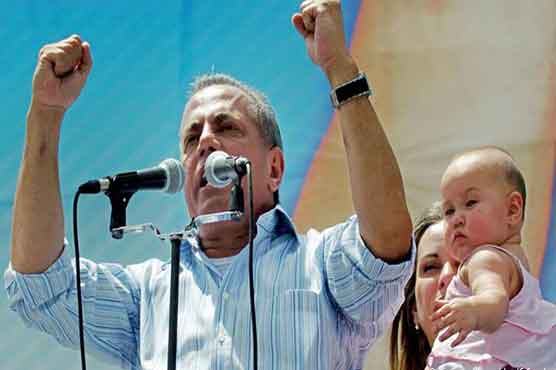
Rosales flew in from Aruba just as Venezuela gears up for the December 6 vote.
MARACAIBO (AFP) - Venezuelan opposition politician Manuel Rosales, who fled into exile after authorities charged him with corruption in 2009, was arrested Thursday as he returned ahead of key legislative elections.
Rosales, a former governor who lost the 2006 presidential election to late socialist leader Hugo Chavez, flew in from Aruba just as Venezuela gears up for the December 6 vote.
Prosecutors said the 62-year-old, founder of center-right party A New Era (UNT), was arrested soon after arrival at the international airport in Maracaibo, the capital of the western state of Zulia, his home region.
A heavy contingent of troops from Venezuela s Bolivarian National Guard and officers of the intelligence service had been awaiting him.
"This deployment for my arrival ought to be made to fight crime and insecurity. We will do that in peace. We are going to claim our due on December 6," Rosales said in a video posted on streaming service Periscope shortly after his arrival.
Journalists were blocked from filming the area as he was arrested.
Rosales had announced plans to return last Friday, leading the attorney general s office to warn he would be detained on charges of stealing public money as Zulia governor between 2000 and 2008.
He had been in exile in Peru, which granted him asylum on humanitarian grounds after he fled Venezuela -- though some reports indicated he had since gone to Panama.
Rosales, who was for years considered Chavez s chief opponent, denies the charges against him and insists they are politically motivated.
He went into hiding in March 2009, ahead of a court hearing to decide whether to jail him pending trial. He was Maracaibo mayor at the time.
Five months earlier, Chavez had accused Rosales of trying to assassinate him and vowed to put him behind bars.
Earlier this year, Rosales was officially barred from running in the upcoming elections, but he vowed to return to "help build our victory on December 6."
Chavez s movement risks losing the legislative polls for the first time since the late leader came to power in 1999.
His successor, President Nicolas Maduro, has struggled to rein in violent crime, end crippling shortages and right the ailing oil giant s recession-racked economy.
But the opposition is divided between a radical wing led by figures like jailed ex-mayor Leopoldo Lopez and a more moderate faction led by 2013 presidential candidate Henrique Capriles.
