Iftar Time Ramadan 8
Lahore
LHR
06:00 PM
Karachi
KHI
06:33 PM
Islamabad
ISB
06:05 PM
Peshawar
PWR
06:09 PM
Quetta
QTA
06:31 PM
Ramadan Pedia

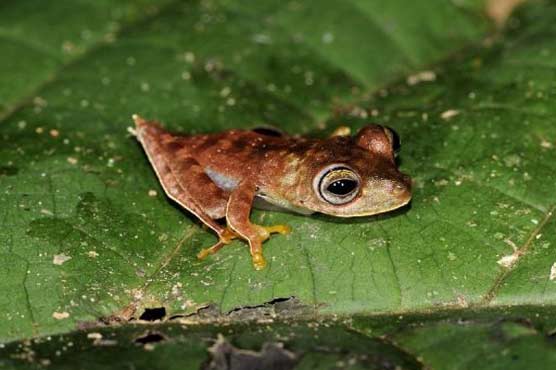
46 new frog species discovered
Dunya News

The findings were made by an expedition of scientists, indigenous people and university students.

A cowboy frog and a crayola katydid are among 46 new species that have been discovered in the dense forests of the tiny South American nation of Suriname, scientists said Wednesday.The caramel-colored frog displays white fringes along its back legs and a spur on its heels, while the unusual katydid earned its nickname from the striking hues on its body and wings.Other discoveries included a two-inch (five-centimeter) catfish, and larger catfish covered with a spiny armor to protect it against predators in the piranha-filled river.The findings were made by an expedition of international scientists, indigenous people and university students as part of a three-week river expedition organized by Conservation International.The journey took them along the Koetari and Sipaliwini rivers, where they also found intriguing new rock carvings, or petroglyphs, along the border with southern neighbor Brazil.As a scientist its exciting to do research in such remote areas where countless new discoveries await you, said Trond Larsen, director of the Rapid Assessment Program survey for Conservation International.The petroglyphs were found on caves near the Trio village of Kwamalasamutu, a site that Conservation International is helping local communities preserve as an ecotourism destination.In 2000, Werehpai cave petroglyphs were discovered in the same area and scientists believe it is the oldest known human settlement found in southern Suriname.Radiocarbon dating and archaeological studies suggest that the first signs of habitation go back at least 5,000 years.According to Conservation International Suriname director Annette Tjon Sie-Fat, the findings will play a vital role in preserving and managing the area as a cultural heritage site and as unique destination for tourists.The environmental group hopes the Suriname government will develop laws to protect the countrys biodiversity, in order to preserve untouched areas and prevent them from being given away as concessions for mining or timber.In 2007 a similar expedition in Suriname resulted in the discovery of 24 new animal species.