Strongest solar storm since 2005 hitting Earth
Dunya News

The sun is bombarding Earth with radiation from the biggest solar storm in more than six years.

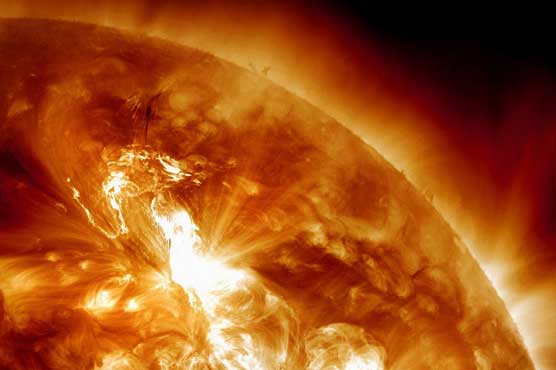
The sun is bombarding Earth with radiation from the biggest solar storm in more than six years with more to come from the fast-moving eruption.The solar flare occurred at about 11 p.m. EST (0400 GMT) Sunday and will hit Earth with three different effects at three different times. The biggest issue is radiation, according to the National Oceanic and Atmospheric Administrations Space Weather Prediction Center in Colorado.The radiation is mostly a concern for satellite disruptions and astronauts in space. It can cause communication problems for polar-traveling airplanes, said space weather center physicist Doug Biesecker.Radiation from Sundays flare arrived at Earth an hour later and will likely continue through Wednesday. Levels are considered strong but other storms have been more severe. There are two higher levels of radiation on NOAAs storm scale severe and extreme Biesecker said. Still, this storm is the strongest for radiation since May 2005.The radiation in the form of protons came flying out of the sun at 93 million miles per hour (150 million kph).The whole volume of space between here and Jupiter is just filled with protons and you just dont get rid of them like that, Biesecker said. Thats why the effects will stick around for a couple days.NASAs flight surgeons and solar experts examined the solar flares expected effects and decided that the six astronauts on the International Space Station do not have to do anything to protect themselves from the radiation, spokesman Rob Navias said.A solar eruption is followed by a one-two-three punch, said Antti Pulkkinen, a physicist at NASAs Goddard Space Flight Center in Maryland and Catholic University.First comes electromagnetic radiation, followed by radiation in the form of protons.Then, finally the coronal mass ejection thats the plasma from the sun itself hits. Usually that travels at about 1 or 2 million miles per hour, (1.6 or 3.2 million kph) but this storm is particularly speedy and is shooting out at 4 million miles per hour, Biesecker said.Its the plasma that causes much of the noticeable problems on Earth, such as electrical grid outages. In 1989, a solar storm caused a massive blackout in Quebec. It can also pull the northern lights farther south.But this coronal mass ejection seems likely to be only moderate, with a chance for becoming strong, Biesecker said. The worst of the storm is likely to go north of Earth.And unlike last October, when a freak solar storm caused auroras to be seen as far south as could see an aurora but not until Tuesday evening, he said.
