


Mountaineering community shocked at Everest brawl
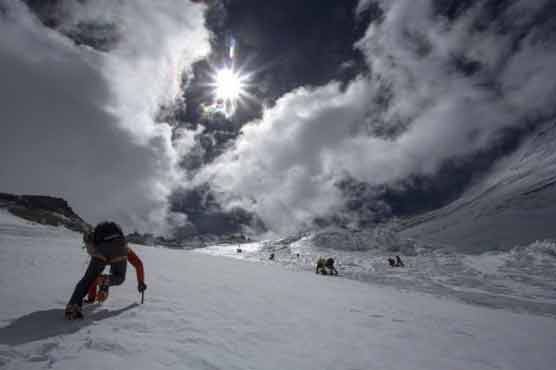
Brawl stemmed from tension between elite climbers and growing commercial expeditions.
KATHMANDU (AFP) - A brawl on Mount Everest last weekend that shocked the mountaineering community stems from tension between elite climbers and growing commercial expeditions on the world s highest peak, experts say.
Italy s Simone Moro and Ueli Steck of Switzerland, two of the world s top mountaineers, accompanied by top British alpine photographer Jonathan Griffith, were involved in a fight with a group of Nepalese Sherpas on Saturday.
While there are many views on who was to blame, all agree the spark was a decision by the Europeans to climb the Lhotse Face, a steep ice wall, while the Nepalese guides were rigging up ropes for their commercial clients.
Last year, hundreds of commercial climbers were famously photographed as they queued to reach the summit, illustrating the huge number of people who flock to the 8,848-metre (29,029 ft) peak each year.
Expecting similar crowds this season, the Expedition Operators Association of Nepal recommended before the start of the 2013 summit season that Sherpas be sent to fix two sets of ropes -- one for ascent and one for descent.
"This year the tensions occurred while the Sherpas were beginning to implement that plan," Mohan Krishna Sapkota, a spokesman in the Tourism Ministry, told AFP.
Moro, Steck and Griffith say they did not interfere with the rope-rigging and they deny as "highly unlikely" allegations that they dislodged ice that hit the rope-fixing Sherpa team.
Other climbers say they were either unaware or did not feel bound by an agreement that no-one else should climb while the Sherpas were busy.
"I know that on the day the ropes are fixed, nobody should hang on the fixed ropes," Moro told National Geographic. "This doesn t mean that nobody is allowed to climb the mountain."
The spat comes as mountaineers mark the 60th anniversary of the first Everest summit on May 29, 1953, by Sir Edmund Hillary and Tenzing Norgay. About 10,000 people have attempted to climb the ultimate peak, almost 4,000 successfully.
Freddie Wilkinson, a US mountaineer and Everest veteran, told AFP that the disagreement highlighted rising friction caused by the competing interests of elite climbers and commercial adventurers.
"Elite climbers think ropes detract from the sport. On the other side are the commercial climbing operators who say it s their right to do business," he said in an interview.
"But the assertion that the route is closed to all climbers while the Sherpas fix the ropes shows a seismic shift in mountaineering etiquette. It means the climbing companies are determining the rules now," he said.
Witnesses say the parties exchanged blows for approximately 20 minutes.
While the details of the drama remain murky, the increased crowding on the peak has raised questions about the safety -- and meaning -- of expeditions.
"Something like this has been coming for a long time," said Sumit Joshi, owner of Himalayan Ascents, who saw the brawl take place.
"For anyone on the mountain, it s obvious who is working the hardest. It s the Sherpas doing so much work and they never get any recognition," he said.
