


Hoping for the return of students unions to campuses
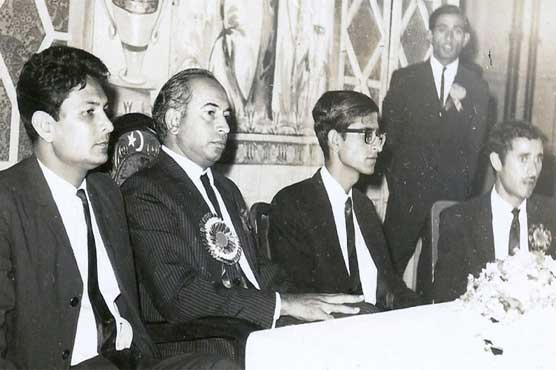
For the first time Senate passed the resolution to revive student unions
Dunya News Report (Saleem Khilji)
ISLAMABAD: After the Senate on January 11 passed a unanimous resolution on the revival of student unions in the country, a number of student organizations, including People’s Students Federation (PSF), Muslim Students Federation (MSF), Insaf Students Federation (ISF), Islami Jamiat Talaba (IJT), etc. have kick started their efforts to press the government for the restoration of students’ elected bodies in their educational institutions. This is for the first time that a parliamentary institution of the country passed such a resolution certainly after realizing the significance of students unions in present political circumstances.
The students unions were banned by the then dictator Gen. Ziaul Haq on February 9, 1984, known as a day of intrigue against democracy. However, in Sindh, the ban was imposed in 1979 on the suspicion that these unions could have ignite a province-wise drive against the ‘judicial murder’ of Zulfikar Ali Bhutto, the founder chairman of Pakistan People’s Party (PPP) and former prime minister of Pakistan.
The ban which spread over a period of 30-years brought an uncanny of the situation. It incurred a tremendous loss to the country’s democratic process as a result of which our assemblies and democratic institutions failed to see a politically trained leadership. On the other hand, the cadre that reached out to our assemblies due to the absence of unions was either apolitical or got elected on the basis of influence in their respective constituencies on different accounts.
Shafqat Munir, a former student leader and presently working in an Islamabad based think-tank, said electioneering process in the colleges and universities to form student unions was a healthy and positive activity. These unions were the political nurseries where future leadership used to be given the chance to sprout, he said.
He was of the view that the student union is a forum which provides opportunities to the youth to discuss their point of views as well as issues related to education and the society. He added that the young leaders and activists used to learn how to exercise their right of freedom of expression. It was the dictator who brought heroin and Kalashnikov culture to the educational institutions, he said, adding that before Zia martial law there was no concept of arms keeping in the educational institutions.
Mr Munir said that during the union election campaigns the students used to get discuss political thoughts and learn the ways to take part in practical politics, which later contributed to their intellectual brought up. He further said the non-existence of this practice has left a political vacuum in the educational institutions which led to immature and non serious activities there. “The unions used to be training forums to make students politically mature, socially active and responsible members of the society,” he concluded.
Benazir Bhutto, in her tenure as prime minister, tried to revive the unions, but her efforts could not prove fruitful due to lack of willingness on the part of her party leadership.
PPP’s Yousuf Raza Gilani, after assuming power as prime minister in 2008, had pledged to revive student unions during his first address to the National Assembly as premier, but he failed to deliver, as no one in the party evinced interest and took initiative in this regard. Even PPP’s own student wing, the People’s Students Federation, seemed least bothered about the revival of political activities in the educational institutions.
Now, with the fresh efforts of Senate chairman Raza Rabbani to bring the unions back to the educational institutions, hopes again cling to the nation, especially the youth.
On January 11, speaking on the floor of the Upper House, he said the ban on student unions was “unconstitutional”. He also referred the issue to a Senate committee, which would prepare a comprehensive report on it. With this action of the Senate, student leader across the country are meeting at small-scales so that a strategy could be devised how to materialize their long-awaited dream.
Surprisingly, no effort has ever been made by the Muslim League leadership to revive the unions besides a number of former and present PML leaders like Khawja Saad Rafique, Javed Hashmi, Ahsan Iqbal, Sheikh Rashid, etc remained active in student politics. All of them know the importance and significance of student unions that they provide a trained cadre to the political parties.
Though student organizations are already in place, they are believed to be ready to take part in elections and form unions in their respective educational institutions. It is believed that the re-launch of student unions would help promote a democratic culture amid criticism that it may halt academic activities and provoke a culture of violence.
There is no doubt that student wings of different political parties remained involved in violence on campus premises, particularly in public-sector institutions, however, a code of conduct for the student unions was in place before their banning, it can be revised in the new social milieu.
There are number of right and left wing student parties exist in the country. Some of which are as under:
Democratic Students Federation (DSF)
Founded in 1949, DSF was a left wing student party. Many other left leaning student organizations can trace their history from this group. Banned in 1956 because of its political association with the communist party, it resulted in several other student groups such as National Students Federation.
National Students Federation (NSF)
Formed in 1956, NSF is a pro-left party of students with its base in Karachi. Its founder leader Meraj Mohammad Khan later joined PPP in 1973. Its constitution advocates struggle for a class free education system and equal rights to every student, and linking students with the international movements against capitalism and imperialism.
Muslim Student Federation (MSF)
MSF is a pro-right wing students group which was formed in 1937 in Calcutta, India by All-India Muslim League. In the Punjab, MSF is aligned to the PML-N, which is a centre-right party (now in the government).
People’s Students Federation (PSF)
PSF is a youth wing of Pakistan People’s Party formed in 70s by PPP chairman Zulfikar Ali Bhutto. Though the history of PSF is replete with sacrifices of young blood during the Zia regime, a group of students, namely Sahar Dubir Sunny, Jamshed Butt (Kh Jamshed Imam) and Tanver Khakwani played a unique role under the hot water.
Insaf Students Federation (ISF)
ISF is the student wing of Pakistan Tehreek-e-Insaf. It surfaced in the late 2000s and took part in the Lawyers Movement against Gen. Pervez Musharraf . It has borrowed ideology from right and left wing factions and is a self-proclaimed social democratic group. Dharna staged by Imran Khan in front of Natioanal Assembly against the government policies last year was mainly weighed by it.
All Pakistan Muhajir Students Organization (APMSO)
APMSO was founded in 1978 by MQM leader Altaf Hussain prior to the formation of MQM in 1984. While the APMSO platform has some liberal elements, the organization has also been involved in violent clashes with other student organizations.
Islami Jamiat-e-Talaba (IJT)
IJT is also a student wing of Jamaat Islami. It is currently the only students’ body which has its roots throughout the country. However, with its conservative and specific religious philosophy, its popularity has got plummeted among the new generation. The IJT s stated mission is to, "eliminate the non-Islamic factors and the secularism from the curriculum and teachings of the educational institutions.
Mustafavi Students Movement (MSM)
Founded by Allama Tahir-ul-Qadri in 1994 in Lahore, the MSM is supposed to protect students from violation and immoral activities and to provide positive avenues to their emotions. This movement is active in universities, colleges, schools and religious institution at national level.
Anjuman Talaba-e-Islam (ATI)
ATI was founded in 1968 to help create equality amongst students.It has been known to hold demonstrations for Islamic and Pakistani causes. ATI has also protested the existence of books that are not in line with their religious beliefs. It has links with Jamiat Ulemai Pakistan-Noorani group (JUP), a religious political party.
Imamia Students Organization
ISO is a Shia student organization founded by Dr Mohammad Ali Naqvi in 1972. In 2012, it had "around 1200 units throughout the country. It aims to set the lives of the young generation in accordance with the teachings of Quran so that they may defend their religion. However, its contribution to student politics and unions is less defined.
