Summary Italy’s parliament rejected equal parental leave in February, but “dad influencers” like Di Franco are helping reshape fatherhood in a country still balancing work, family, and gender equality
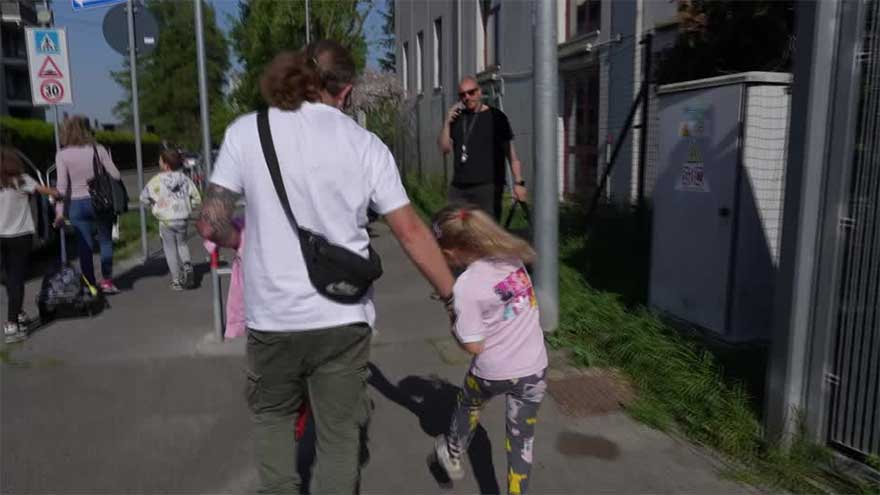
(Reuters) – Every afternoon in a Milan suburb, Diego Di Franco picks up his children from school, manages after‑school activities and prepares dinner, tasks traditionally associated with Italian mothers. The routine is unremarkable in Italy, except that he is a father and he shares it online.
Italy's parliament in February rejected a proposal to equalise maternity and paternity leave, but Di Franco and a growing number of so‑called "dad influencers" are reshaping how fatherhood looks in a country still struggling to reconcile work, family and gender equality.
In the eurozone's third‑largest economy, led by its first female prime minister, Giorgia Meloni, who has a 9-year-old daughter, women shoulder most care work and face one of Europe's widest gender employment gaps, a drag on long‑term growth as the population ages.
Economists and activists say the situation is exacerbated by a stark policy imbalance: five months of maternity leave versus just 10 days of paternity leave.
An opposition-backed proposal to introduce equal, non‑transferable and fully paid parental leave for mothers and fathers, modelled on reforms adopted in countries such as Spain, was rejected by 137 votes to 117 by the centre‑right Italian government in February, citing budget constraints.
The parliamentary outcome contrasts with a trend playing out on social media, where Italian fathers are increasingly posting about daily childcare, turning paternal care into a visible, mainstream narrative.
"The number of dad-influencing bloggers is increasing and it's very varied. They've made a huge contribution in putting forward a different narrative about fatherhood, which is more inclusive, more equal, also fun," said sociologist and consultant for Children's Health Centre (CSB) Annina Lubbock.
A prominent example is Di Franco, a 45‑year‑old father of two with more than 50,000 Instagram followers. He documents life as a primary caregiver while his wife Raffaella works full‑time as a senior manager, an arrangement that remains uncommon in Italy.
"People kept seeing me alone with this child and started to think I might be a widower, or even separated," Di Franco told Reuters in an interview at his flat, where family photos hang on the walls alongside posters of Napoli, the family’s favourite football team.
For Raffaella, Diego's presence proved decisive for her career. It "gave me the confidence to face certain challenges," she said, "to embrace the opportunities that were around."
Yet the Di Franco household remains far from the norm. Female employment in Italy stood at 53% in 2024, with the widest gender employment gap in the EU, according to Eurostat.
Women account for around 70% of voluntary resignations in Italy, often following childbirth, while involuntary part‑time work remains widespread.
Economists link the difficulty of juggling work and raising a child to Italy's demographic decline, warning that higher female employment is essential to sustain growth and public finances, and more help for working women would encourage them to have children.
Personal experience has made Di Franco optimistic. "With my first child I was the only dad at kindergarten," he said. "Six years later, there were three or four. And I thought: things are changing."