Summary NASA plans a robotic mission to save the $250 million telescope from burning up Earth's atmosphere.
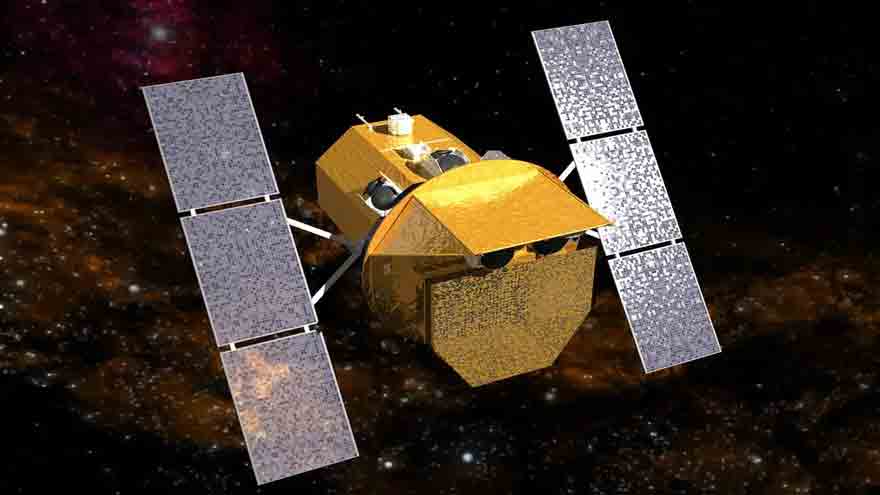
(Web Desk) - National Aeronautics and Space Administration (NASA) is preparing a historic robotic mission to save its $250 million Neil Gehrels Swift Observatory from burning up in Earth's atmosphere after its orbit began deteriorating due to increased solar activity.
Launched in 2004, the space telescope has spent more than two decades observing some of the universe's most powerful cosmic explosions, including gamma-ray bursts and supernovae. However, heightened solar activity in recent years has accelerated orbital decay, raising the risk that the observatory could re-enter Earth's atmosphere and burn up later in 2026 if its altitude is not increased.
NASA's Associate Administrator for the Science Mission Directorate, Nicky Fox, said losing the Swift Observatory would deprive the agency of a critical scientific asset. She added that budget constraints make it impossible to build a comparable replacement in the near future.
To extend the telescope's operational life, NASA has awarded a contract worth nearly $30 million to a US company developing a small robotic spacecraft called Link.
The spacecraft will use three robotic arms to capture the observatory and raise its orbit from about 360 kilometres to a safer altitude of around 600 kilometres. If successful, the mission is expected to extend the telescope's lifespan by at least one year, and potentially longer.
The robotic spacecraft is scheduled to be launched aboard an air-launched rocket deployed from an aircraft near the Marshall Islands. After reaching orbit, it is expected to take about a month to rendezvous with the Swift Observatory, while the orbit-raising operation could take several weeks to a few months to complete.