Summary Three decades later, that warning appears increasingly relevant.
ISLAMABAD (Web Desk) - A generation ago, geopolitical analysts warned that the world's future conflicts would be fought over water rather than oil.
"The wars of the new millennium would be fought over water," former World Bank Vice President Ismail Serageldin predicted in the mid-1990s.
Three decades later, that warning appears increasingly relevant.
In April 2025, India announced it was placing the Indus Waters Treaty (IWT) in abeyance following the Pahalgam attack, raising fresh concerns over the future of one of the world's longest-standing transboundary water-sharing agreements.
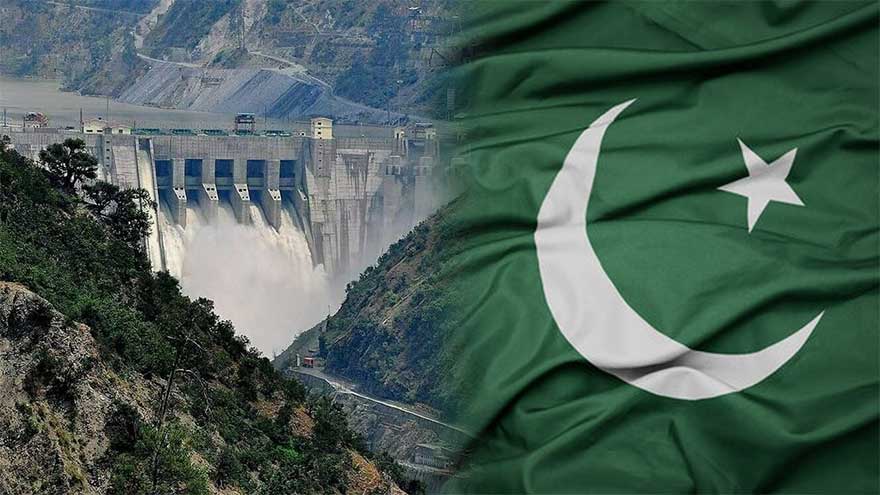
Signed in September 1960 and brokered by the World Bank, the treaty has survived three wars and decades of political hostility between the two nuclear-armed neighbours, making it one of the most enduring international agreements governing shared water resources.
Indus Waters Treaty
The Indus Waters Treaty regulates the use of the rivers flowing through the Indus basin between India and Pakistan.
Under the agreement, the three Western Rivers, the Indus, Jhelum and Chenab, are allocated primarily to Pakistan, while the three Eastern Rivers, the Ravi, Beas and Sutlej, are allocated to India, with each country enjoying specified rights and obligations over the shared river system.
For Pakistan, the treaty represents far more than a diplomatic arrangement.
The Indus river system is the country's primary source of irrigation, sustaining agriculture, food security, the textile industry and a significant share of electricity generation.
Any prolonged disruption to these water flows would carry profound economic, environmental and humanitarian consequences.
Matter of national security
Pakistan has consistently framed the issue as one of national security.
Following a meeting of the National Security Committee on April 24, 2025, the Foreign Office stated that the Indus Waters Treaty is "a binding international agreement brokered by the World Bank and contains no provision for unilateral suspension."
The statement further declared:
"Water is a Vital National Interest of Pakistan, a lifeline for its 240 million people and its availability will be safeguarded at all costs."
It also warned:
"Any attempt to stop or divert the flow of water belonging to Pakistan as per the Indus Waters Treaty, and the usurpation of the rights of lower riparian will be considered as an Act of War and responded with full force across the complete spectrum of National Power."
These statements underscore how disputes over shared water resources can become catalysts for broader military escalation between two nuclear-armed states, with consequences extending far beyond South Asia.
The nuclear risk
Scientific research suggests that the consequences of a large-scale nuclear conflict between India and Pakistan would not remain confined to the region.
In a study published in ‘Science Advances’, researchers modelled a scenario in which India uses 100 strategic nuclear weapons against urban centres and Pakistan responds with 150.
The study estimates immediate fatalities of between 50 million and 125 million people.
The resulting firestorms could inject between 16 and 36 teragrams of black carbon into the atmosphere, reducing global sunlight by 20–35%, lowering average global temperatures by 2–5°C, decreasing precipitation by 15–30%, and disrupting agricultural production for more than a decade.
The researchers conclude that these climatic effects could trigger widespread crop failures, mass starvation and millions of additional deaths worldwide.