



Supreme Court reserves verdict in contempt case against Daniyal Aziz
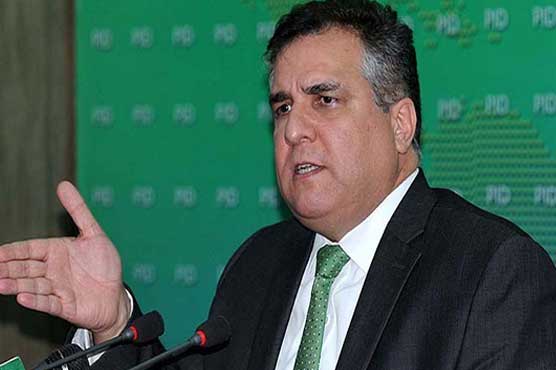
A three-member bench headed by Justice Azmat Saeed conducted hearing of the case.
ISLAMABAD (Dunya News) – The Supreme Court on Thursday reserved the verdict in contempt of court case against Federal Minister for Privatisation Daniyal Aziz.
A three-member bench headed by Justice Azmat Saeed conducted hearing of the case.
“We thank all the lawyers. Mr Daniyal! You have also presented your case well,” remarked Justice Azmat. The judge inquired about the minister’s qualification. His lawyer told that Daniyal is an economist.
“The work of an economist is not to talk but to work,” said the judge.
Speaking during the hearing, Aziz maintained, “I have struggled for the freedom of judiciary and betterment of laws. I respect the judiciary without any ifs and buts. My hair has turned white and time has fixed me.”
“Daniyal Aziz you have to give this speech outside the court but you have begun here,” said the judge in a lighter tone. “I have spent my life while strengthening institutions,” uttered Daniyal.
“This case is not in front of us. Just as people start to go after a rally, they have also begin to leave from the court after hearing your speech. Thank you, Mr Daniyal! We reserve the judgment in the case,” remarked the judge.
On March 13, the Supreme Court indicted Aziz in contempt of court case under Article 204 of the Constitution and Contempt of Court Ordinance, 2003.
Later, the court approved his request to submit documents in his defense in the contempt charges against him.
ANTI-JUDICIARY REMARKS
The case was initiated against the minister on February 2 over his alleged anti-judiciary speeches and remarks made during television shows.
The SC bench had stated — in prima facie — Danyial Aziz has been found guilty of contempt of court as per TV recordings and newspapers’ clippings dated 9th of June-2017, 15th and 31st of Dec-2017.
However, Aziz had blamed media for misrepresentation of his statements and out of context reporting.
Aziz claimed that he has always respected the courts and talked within the limits of ethical codes on sub judice cases. He said he tried neither to dishonour the constitutional institutes nor become an obstacle in the judicial process and justice.
