



Mercury rising: Fatal temperatures could cause deaths in Pakistan and other regions
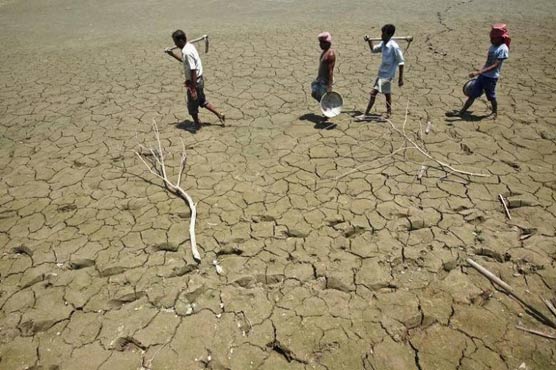
The only solution is to reduce greenhouse gas emissions. Photo: Reuters
(Web Desk) - A recent study has found that regions including southern Pakistan, Bangladesh and northern India could face harsh weather conditions by the end of this century. According to researchers, in these areas - home to 1.5 billion people, the temperature and humidity will rise to such levels that it would be impossible to even go outside.
While climate change has been causing serious damage all over the world, South Asian regions are prone extreme temperatures. According to The Independent, the study shows that people will not be able to cope with the estimated temperatures and moisture levels combined. These factors will make it impossible for the human body to cool itself and end in death.
The researchers have used a research that studies effects of hot weather, hazardous temperatures and high humidity on humans. A “wet bulb” is used to measure temperature by analysing the ability of moisture to evaporate.
In today’s age, wet bulb temperatures have rarely risen above 31C temperature, but if it reaches up to 35C, the human body will be unable to cool itself down and eventually perish. The year 2015 saw the temperature rise close to this limit in the gulf region; the same year more than three thousand people died due to heat in Pakistan alone.
Extreme heatwaves are expected to raise wet bulb temperatures between 31Cand 34C, research shows. The only solution to counter this is to reduce greenhouse gas emissions on large scale.
Dr Elfatih Eltahir, an author of this study, from Massachusetts Institute of Technology, said that this has brought us very close to the threshold of survivability. Any temperature above 30C is severe and possibly fatal. "With the disruption to the agricultural production, it doesn t need to be the heatwave itself that kills people. Production will go down, so potentially everyone will suffer," Dr. Eltahir noted.
