



Sartaj Aziz rejects impression of Syria policy shift
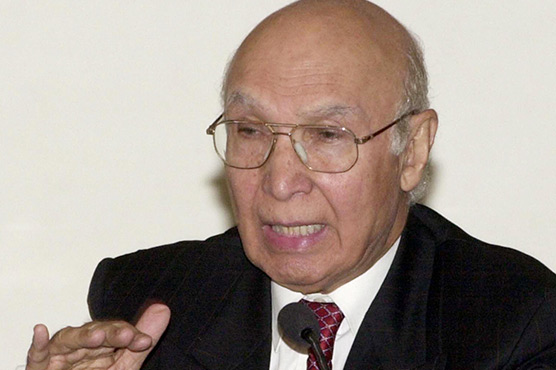
Says restoration of peace in the troubled country is Pakistan’s principled stance.
ISLAMABAD (Dunya News/Agencies) - Advisor on National Security and Foreign Affairs Sartaj Aziz has rejected allegations of selling of arms for use in Syria or any change in Pakistan’s policy towards conflict in that country under Saudi pressure.
“We strongly reject the speculations surfaced in the media regarding change in Pakistan s policy on Syria and linking it with the visit of Saudi crown prince,” he said in a statement in National Assembly.
“This impression is baseless and misleading that there has been a policy shift regarding Syria. Pakistan fully honours national and international laws in its agreements and sale of arms,” he said.
Sartaj Aziz said Pakistan s policy towards Syria is based on principles. It supports sovereignty and territorial integrity of Syria and cessation of hostilities by all sides.
Responding to points raised by Syed Naveed Qamar and Shah Mehmood Qureshi‚ Minister for Kashmir Affairs Ch Barjees Tahir said peaceful polling was held on Saturday for by-election in LA-22 constituency of Azad Kashmir Legislative Assembly.
He said allegations of rigging are baseless.
He said on Monday people blocked a road in Baloch area and when police tried to clear the road‚ exchange of fire took place in which several people were injured from both side. Later‚ one injured person expired.
He said judicial inquiry has already been ordered and action would be taken against those found guilty.
Four bills were introduced in the National Assembly on Tuesday.
The Bills are Constitution Amendment Bill 2014‚ Criminal Law Amendment Bill‚ Control of Narcotics Substances Amendment Bill 2014 and Shaheed Zulfiqar Ali Bhutto Medical University Islamabad (Amendment) Bill.
The House held debate on the foreign policy on a motion moved by Shahida Rehmani.
The mover and other members who spoke on the motion emphasized that Pakistan should seek friendly relations with all countries especially the regional countries.
