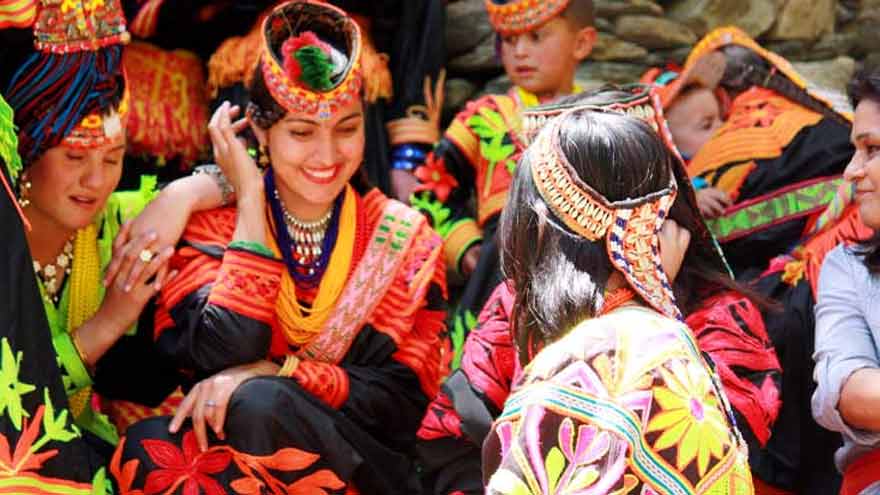
Summary Kalash Valley in Chitral is now a UNESCO World Heritage Site, marking global recognition of its unique culture, heritage, and Pakistan’s cultural preservation efforts.
CHITRAL (Dunya News) - The three valleys of the Kalash community, located in the Hindu Kush mountain range of Chitral district in Khyber Pakhtunkhwa, have been included in UNESCO’s tentative list of cultural heritage sites, marking a significant achievement according to the Department of Archaeology.
According to details available on UNESCO’s website, the three Kalash valleys—Bamburet, Biri, and Rumbur—have preserved their culture due to their location between remote mountain ranges.
UNESCO notes that the Kalash community’s strong social bonds, traditional belief system, and surrounding environment make it a unique society that has successfully preserved its traditions and cultural identity.
The organization further highlights that the community has several sacred sites and ritual spaces where people gather to celebrate religious and cultural festivals.
UNESCO also states that the Kalash community has maintained its traditions and customs for centuries, making it a rare and distinct cultural group that stretches from populated areas into mountainous regions.
There are 143 cultural sites in these valleys, including temples, halls, and grounds used for rituals.
Such a cultural and settlement pattern is rare globally, with comparisons drawn to Austria’s Wachau Cultural Landscape.
Similarly, the Kalash community is also compared to the Ifugao community in the Cordilleras region of the Philippines, as both share similarities in traditions and ways of life.
The Kalash Valley is located about a two-hour journey from Chitral’s main bazaar and comprises the three valleys of Bamburet, Biri, and Rumbur.
It is considered one of Pakistan’s oldest civilizations, with its own customs, language, and distinct lifestyle.
Major religious festivals are held in December, attracting tourists from across Pakistan and around the world.
The government has also introduced legislation aimed at preserving Kalash culture.