Summary He said Pakistan’s development strategy was anchored in the “Uraan Pakistan” initiative, which focuses on five priority pillars: exports, digitalization, environment, energy and equity.
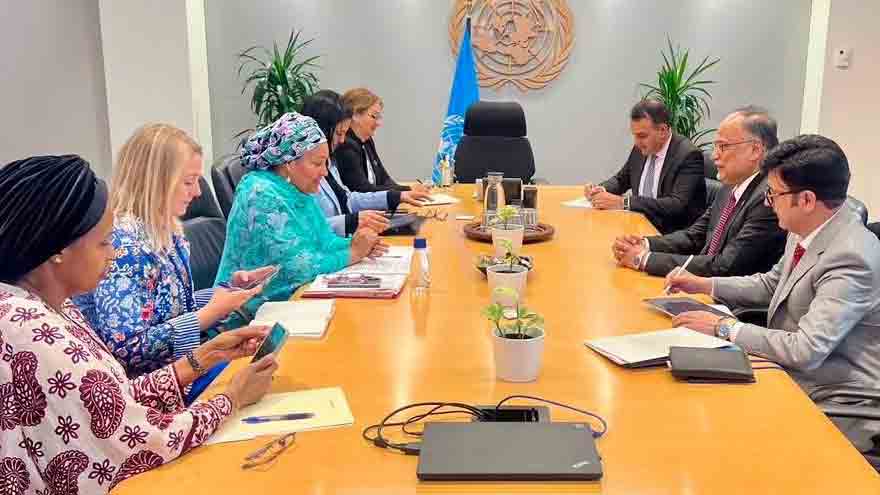
UNITED NATIONS (APP) - Federal Minister for Planning, Development and Special Initiatives Ahsan Iqbal met on Tuesday with United Nations Development Programme (UNDP) Administrator Alexander De Croo in New York and discussed Pakistan’s development priorities and ways to further strengthen the longstanding partnership between Pakistan and the UNDP.
Speaking during the meeting, the minister reaffirmed Pakistan’s commitment to its partnership with the UNDP and expressed appreciation for the organization’s continued support in advancing the country’s national development agenda, a news release said.
He said Pakistan’s development strategy was anchored in the “Uraan Pakistan” initiative, which focuses on five priority pillars: exports, digitalization, environment, energy and equity.
Ahsan Iqbal acknowledged the UNDP’s longstanding collaboration with the Ministry of Planning, particularly its support for localizing the Sustainable Development Goals (SDGs) through SDG Support Units and its role in convening the 2025 SDGs Policy Dialogue for Action.
The discussion also focused on Pakistan’s SDG Plus Programme, aimed at accelerating implementation of the SDGs through stronger provincial ownership and localized action.
Both sides underscored the importance of bringing the SDGs closer to communities by strengthening implementation at the provincial level.
The minister said Pakistan’s National Economic Council had decided to conduct quarterly reviews of provincial performance on key social indicators, recognizing that many human development responsibilities rest with provincial governments.
De Croo welcomed Pakistan’s efforts to strengthen institutional mechanisms for SDG implementation and reaffirmed the UNDP’s commitment to supporting the country’s sustainable development agenda.
The minister said Pakistan’s development ambitions continue to face challenges because of debt-servicing obligations and limited fiscal space.
He expressed hope that the UNDP would continue supporting Pakistan’s efforts to mobilize development and climate financing, including through SDG-aligned investment initiatives.
Ahsan Iqbal highlighted Pakistan’s vulnerability to climate-induced disasters and praised the UNDP’s contribution to flood response and recovery following the devastating 2022 floods, including its support for the International Conference on Climate Resilient Pakistan and implementation of the Resilient Recovery, Rehabilitation and Reconstruction Framework (4RF).
He emphasized the importance of expanding cooperation to build long-term climate resilience, including through Glacial Lake Outburst Flood (GLOF) projects, as well as initiatives aimed at reducing poverty and creating jobs to address Pakistan’s demographic and employment challenges.