Summary The minister underscored that taxation is not merely a fiscal instrument but also a policy tool that shapes consumption patterns, public health outcomes, and industrial development
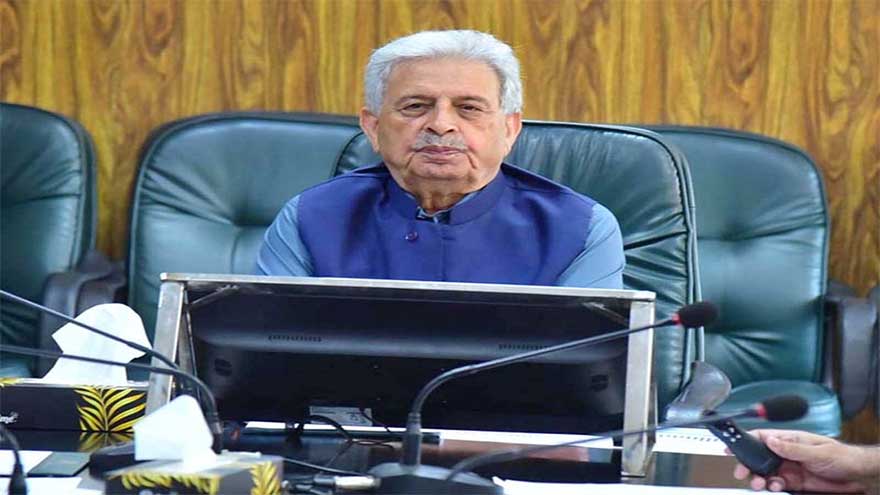
ISLAMABAD (APP) - Minister for National Food Security & Research, Rana Tanveer Hussain on Tuesday said that Pakistan needed smart taxation in order to promote nutrition, innovation and rural economy.
The minister was addressing a high-level consultation organized by the Sustainable Development Policy Institute (SDPI), where key stakeholders from government, academia, industry, and development partners gathered to deliberate on the rationalization of Federal Excise Duty (FED) on beverages and juice products in Pakistan.
The discussion centered on the economic, nutritional, industrial, and agricultural dimensions of the existing tax structure and its broader implications for the country’s food and beverage sector.
The minister underscored that taxation is not merely a fiscal instrument but also a policy tool that shapes consumption patterns, public health outcomes, and industrial development.
He observed that the current uniform FED regime does not adequately reflect the significant differences in sugar content, nutritional value, and economic contribution across various beverage categories, and therefore calls for a more nuanced and evidence-based approach to taxation.
Rana Tanveer Hussain emphasized that Pakistan’s policy framework must carefully balance multiple objectives, including the protection of public health, the sustainability of domestic agriculture, the competitiveness of industry, and the stability of government revenues.
He noted that these goals are not contradictory and can be pursued simultaneously through calibrated and rational policy design.
Highlighting the link between the beverage industry and agriculture, the minister pointed out that the formal juice industry plays an important role in strengthening agro-based value chains by procuring substantial quantities of locally produced fruits, thereby generating income opportunities for farmers, transporters, processors, packaging suppliers, and rural workers.
He stressed that policy stability in this sector is essential for encouraging investment, value addition, and long-term growth.
At the same time, he drew attention to the growing challenge of undocumented and unregulated markets, cautioning that excessive pressure on documented industries can unintentionally shift consumers toward cheaper, lower-quality alternatives.
Such shifts, he noted, raise serious concerns regarding food safety, consumer protection, and revenue leakage, and therefore require careful policy calibration.
The minister also highlighted the global trend toward differentiated taxation based on sugar content and nutritional composition, stating that Pakistan should move in a similar direction by encouraging healthier product formulations and innovation within the industry.